Links: On-Screen Version | Homepage | Rapture Letter | Verses of the Day | Site Map
“As Moses lifted up the serpent [the serpent made of bronze described in Numbers 21:8–9] in the wilderness, even so must the Son of Man be lifted up, so that whosoever believes in Him will have eternal life, for God so loved the world, that He gave His only begotten [uniquely born] Son, that whosoever believes in Him shall not perish but have eternal life.”
“…for by grace you are saved through faith and that not of yourselves; it is the gift of God, not as a result of works, lest any man should boast.”
Above is the content of John 3:14–16 and the content of Ephesians 2:8–9, respectively. Itʼs worthwhile to refrain from receiving the mark referenced in Revelation 13:11–18 and to instead receive eternal life for free by believing that Jesus is the Savior. Before doing any Bible studying and before praying to God the Father, it is useful for a person who has believed in the Lord Jesus Christ as the Savior to try to think of any sins that one might have committed since one last confessed oneʼs known post-salvation sins to God the Father, and if one has indeed committed any, to then silently confess those sins to God the Father—confessing only one time for each sin—in accordance with what is mentioned in 1 John 1:9:
“If we confess our sins, He is faithful and just to forgive us our sins and to cleanse us from all unrighteousness.”
This webpage could be periodically updated. If there is a mass disappearance of people professing to be Christians, and if the original author of this webpage is amongst those people disappearing en masse, then it is possible that this webpage will no longer be updated. Also, if there is a mass disappearance of people professing to be Christians, it is worthwhile to consider the possibility that those people have exited from the earth on the occasion known as the Rapture instead of assuming that that mass disappearance involves extraterrestrials abducting those people or involves the annihilation of those people or involves anything else other than the Rapture.
Below are links related to archived copies of this webpage.
archive.is/John314-16.com/Romans_1-20_and_the_Other_Verses_of_Romans_1-Print_Version.html
archive.ph/John314-16.com/Romans_1-20_and_the_Other_Verses_of_Romans_1-Print_Version.html
web.archive.org/*/John314-16.com/Romans_1-20_and_the_Other_Verses_of_Romans_1-Print_Version.html
Also, it is possible that it is worthwhile to print this content in case of time periods involving lack of Internet connectivity.
When studying the Word of God, it is beneficial to keep in mind the content of Hebrews 4:12:
“Indeed, the Word of God is alive and powerful, sharper than any two-edged sword, piercing even to the dividing asunder of the soul and the spirit and of the joints and the marrow and is a critic of thoughts and intents of the heart.”
Note: The heart refers to the mind.
It is also beneficial to keep in mind the content of 2 Timothy 3:16–17 when studying the Word of God:
“All Scripture is God breathed and is profitable for doctrine, for reproof, for correction, for instruction in righteousness, that the man of God might be mature, having been thoroughly furnished unto all good work.”
It is the responsibility of a pastor-teacher to endeavor to correctly understand the Word of God and then to accurately teach the Word of God, as per the content of 2 Timothy 2:15:
“Be diligent to present yourself approved to God as a workman who does not need to be ashamed, accurately handling the Word of Truth.”
A pastor-teacher is a communicator rather than a crutch on which to be leaned. In that regard, a believer in the Lord Jesus Christ should refrain from putting oneʼs trust in and thereby serving as a devoted follower of and thus worshiping a pastor-teacher. Likewise, a believer should refrain from putting oneʼs trust in and thereby serving as a devoted follower of and thus worshiping anyone other than the Trinity [God the Father, God the Son, and God the Holy Spirit], as per Joshua 24:15, the content of which references Joshua speaking to the Israelites:
If it is disagreeable/bad/evil/wrong/wretchedness/displeasing in your sight to serve/worship Jehovah / Yahweh / I am I am / the existing One, choose for yourselves today whom you serve/worship: whether the gods ['elohiym / false gods] which your fathers have served/worshiped which were beyond the river or the gods ['elohiym / false gods] of the Amorites in whose land you are living. As for me and my house, we serve/worship Jehovah / Yahweh / I am I am / the existing One.
Note: Joshua, the leader of the Israelites after Joshua had been serving as the assistant of Moses while Moses was the leader of the Israelites, set the example for the Israelites. Joshua chose to put his trust in and thereby serve as a devoted follower of and thus worship God the Father rather than Joshua choosing to put his trust in and thereby serve as a devoted follower of and thus worship the lesser of multiple evils amongst multiple choices of 'elohiym [el-oh-HEEM]. The word 'elohiym with a lowercase e can refer to false gods, to angels, or to human rulers or judges. The word 'Elohiym with a capital E refers to the Trinity. The word 'elohiym can also be used to refer to might as in mightiness. In that regard, the use of the word 'elohiym in reference to false gods, to angels, or to human rulers or judges involves the connotation of mightiness in comparison to an average human. When a person puts oneʼs trust in and thereby serves as a devoted follower of and thus worships an angel or human, that angel or human is that personʼs false god. Regarding the foregoing, the content of Joshua 24:15 involves Joshua calling attention to the choices that the Israelites had, and that content involves Joshua permitting the Israelites to make their choices while Joshua led by example with his choice.
The gift of pastor-teacher is for the purpose of each pastor-teacher functioning as a messenger who communicates the Word of God rather than functioning as a priest between the Trinity and mankind. In that regard, the time period that can be referred to as the Church Age started fifty days after the Lord Jesus Christ was resurrected, and all Church Age believers in the Lord Jesus Christ are priests. The Lord Jesus Christ is the High Priest of Church Age believers, and believers should be willing to acknowledge/confess/profess to people the believersʼ faith in the Lord Jesus Christ, as per Hebrews 4:14–15:
Therefore, since we have a great High Priest Who has passed through the heavens, Jesus the Son of God, let us hold fast the acknowledgment/confession/profession. Indeed, we do not have a high priest who cannot sympathize with our weaknesses, but One Who has been tempted in all things as we are, yet without sin.
Also, the Lord Jesus Christ is the High Priest according to the order of Melchizedek [mel-KIZ-uh-dek], who was the ruler of Salem when Abraham was still named Abram. Melchizedek was both a king and a priest, as per Genesis 14:18, which references Melchizedek greeting Abram:
Then Melchizedek king of Salem has brought out bread and wine, and he is a priest of 'El [AYL] 'Elyown [el-YOHN] / God [focusing on God the Fatherʼs power] Most High.
The Lord Jesus Christ is also both a king and a priest because the Lord is the Priest according to the order of Melchizedek, as per Hebrews 7:14–17:
Indeed, it is evident that our Lord has arisen from Judah, a tribe with reference to which Moses spoke nothing concerning priests. Also, it is still much more evident: that according to the similarity of Melchizedek, Another of a different type of priest arises, Who has become such not on the basis of a law of fleshly command / physical requirement but according to the power of an indestructible life. Indeed, it is attested: “YOU ARE A PRIEST FOREVER, ACCORDING TO THE ORDER OF MELCHIZEDEK.”
Note: The Lord Jesus Christ is from the tribe of Judah. Also, the Lord Jesus Christ is qualified to be a priest because He was resurrected and therefore has an indestructible body. The above content in all capital letters is a reference to Psalm 110:4.
Because a king is royalty, a king who is a priest is a royal priest. In that regard, Church Age believers are royalty because they are members of the Lord Jesus Christʼs family. Therefore, all Church Age believers are royal priests, as per 1 Peter 2:9–10:
However, you are A CHOSEN PEOPLE, A royal PRIESTHOOD, A HOLY NATION, A PEOPLE FOR ACQUISITION/PRESERVATION, so that you may proclaim the excellencies of Him Who has called you out of darkness into His marvelous light, for you once were NOT A PEOPLE, but now you are GODʼS PEOPLE. You had NOT RECEIVED MERCY, but now you have RECEIVED MERCY.
Note: Before the Church Age, Gentiles were not Godʼs people. In the Church Age, both Jewish and Gentile believers are Godʼs people. The content of 1 Peter 2:10 references Hosea 2:23. In that regard, Peter uses references involving Israel in the Old Testament to refer to Church Age believers.
Itʼs the message rather than the messenger that should be the focus of the believer in the Lord Jesus Christ. Put succinctly: itʼs the message rather than the messenger. In that regard, it is beneficial to keep in mind the content of Revelation 22:8–9, which was written by the apostle John, who, in addition to writing The Revelation to John, wrote The Gospel According to John, The First Epistle of John, The Second Epistle of John, and The Third Epistle of John:
I, John, am the one who heard and saw these things, and when I heard and saw, I fell down to worship at the feet of the angel who showed me these things, but he says* to me, “Do not do that. I am a fellow servant of yours and of your brethren the prophets and of those who keep the words of this book. Worship God.”
*Note: The word says is in the Greek historical present tense. By means of the Greek historical present tense, past action or future action can be described from the perspective of someone seeing the action as it occurs.
Regarding messages, believers should use the Word of God to examine what is being communicated. That is what the Bereans who are mentioned in Acts 17:10–12 did:
The brethren immediately sent Paul and Silas away by night to Berea, who, when they arrived, went into the synagogue of the Jews. Now these were more noble-minded than those in Thessalonica, who received the word with all eagerness / readiness of mind, examining the Scriptures daily to see whether these things were so. Therefore, many of them believed, and not a few prominent Greek women and men.
Note: The phrase not a few means “quite a few.”
Today, the return of the Lord Jesus Christ to meet believers in the Lord Jesus Christ in the clouds on the occasion of the Rapture is one day closer than it was yesterday. The Rapture involves both deceased and living believers in the Lord Jesus Christ meeting the Lord in the clouds in the atmosphere of the earth, receiving glorified immortal resurrection bodies similar to the Lord Jesus Christʼs glorified resurrection body, and going to Heaven with those resurrection bodies. Before the Rapture occurs, deceased believers in the Lord Jesus Christ are in Heaven without glorified bodies. While it is possible that the Rapture will occur on the day of the Feast of Trumpets / Yom Teruah [yahm tuh-ROO-uh or yohm tuh-ROO-uh]—which is what some people call Rosh Hashanah and which some people celebrate for two days—the next occurrence of which will possibly be during August, September, or October of 2026, it is worthwhile for believers in the Lord Jesus Christ to get into the habit of being prepared every day for the return of the Lord, just in case the Rapture will occur on a day other than the day of the Feast of Trumpets / Yom Teruah. Furthermore, it is worthwhile to be in the habit of being prepared for the Rapture so that if it does occur on the day of the Feast of Trumpets / Yom Teruah, one can be prepared for that day because of already being in the habit of being prepared. Examples of being prepared for the Rapture include applying the content of 1 John 1:9 whenever one sins, being unselfish, and whenever circumstances are such that an opportunity arises, sharing the gospel—the good news that believing that the Lord Jesus Christ is the Savior Who was judged on the cross for the sins of humanity is the means by which a person is able to have eternal life. Regarding sharing the gospel, one could also have a written or printed message containing the gospel with that written or printed message located somewhere where it could be easily noticed so that if a person or people were to read or hear that written or printed message either before or after the Rapture occurs, that person or people would thereby read or hear the gospel by means of that written or printed message.
Regarding information about the Rapture, it is beneficial to keep in mind the content of 1 Thessalonians 4:13–18 and 1 Corinthians 15:51–52:
1 Thessalonians 4:13–18
Now we do not want you to be uninformed, brethren, about those who are asleep, so that you will not grieve as do the rest who have no hope, for if we believe that Jesus died and rose again—and we do indeed believe that Jesus died and rose again—so also God will bring with Him those who have fallen asleep through Jesus. Indeed, this we say to you by the word of the Lord, that we who are alive who remain until the coming of the Lord will not precede those who have fallen asleep, for the Lord Himself will descend from heaven with a shout of command, with a voice of an archangel and with a trumpet of God, and the dead in Christ will rise first. Then we who are alive who remain will be caught up together with them in the clouds to meet the Lord in the air, and so we shall always be with the Lord. Therefore, comfort one another with these words.
1 Corinthians 15:51–52
Behold, I tell you a mystery: we will not all sleep, but we will all be changed, in a moment, in a twinkling of an eye, at the last trumpet, for a trumpet will sound, and the dead will be raised incorruptible, and we will be changed.
After the Rapture will be the seven-year Tribulation. The believers who will be alive on the earth when the Rapture occurs will escape the Tribulation. 1 Thessalonians 5:1–11 covers that topic. In that regard, in the book 1 Thessalonians, the content of 1 Thessalonians 4:13–18 is immediately followed by the content of 1 Thessalonians 5:1–11.
1 Thessalonians 5:1–11
Now as to the times and the epochs, brethren, you have no need of anything to be written to you, for you yourselves know full well that the day of the Lord is coming just like a thief in the night. While they are saying, “Peace and safety!” then sudden destruction comes upon them like labor pains upon a woman with child, and they will not escape. However, you, brethren, are not in darkness, that the day would overtake you like a thief, for you are all sons of light and sons of day. We are not of night nor of darkness; therefore, let us not sleep as others, but let us be alert and sober. Indeed, those who sleep do their sleeping at night, and those who get drunk get drunk at night. However, since we are of day, let us be sober, having put on the breastplate of faith and benevolence/goodwill, and as a helmet, the hope / absolute confidence of deliverance, for God has not destined us for wrath but for obtaining deliverance through our Lord Jesus Christ, Who died for us, so that whether we are awake or asleep, we will live together with Him. Therefore, comfort one another and edify one another, just as you also are doing.
Note: In this context, the day of the Lord is the time period that consists of the Rapture, the seven years of the Tribulation, and the Second Advent. In that regard, deliverance from the Tribulation is the deliverance in this context. Also, unspecified is who will be saying “Peace and safety!” In this context, sleeping refers to a lack of alertness. The alertness in this context involves being ready for the Rapture. In order to be ready for the Rapture, a believer needs to be filled with the power of God the Holy Spirit and to pay attention for historical trends such as people saying “Peace and safety!” and for historical trends that match the pattern of the world being on the brink of tremendous calamities like those that will occur during the Tribulation. Regarding being filled with the power of God the Holy Spirit, once a believer commits a sin after salvation, that believer is no longer filled with the power of God the Holy Spirit and is out of fellowship with the Trinity. After that believer has confessed/acknowledged to God the Father all of that believerʼs known unconfessed post-salvation sins, fellowship with the Trinity and the filling with the power of the Holy Spirit are restored. The procedure for confessing/acknowledging to God the Father all of oneʼs known unconfessed post-salvation sins is mentioned in 1 John 1:9: “If we confess our sins, He is faithful and just to forgive us our sins and to cleanse us from all unrighteousness.” Fellowship with God the Father and God the Son is mentioned in 1 John 1. Being out of fellowship with God the Holy Spirit is referenced in Ephesians 4:30. In that regard, when a believer sins, that believer grieves the Holy Spirit. Losing the filling of the power of God the Holy Spirit is referenced in 1 Thessalonians 5:19. In that regard, when a believer sins, the power of God the Holy Spirit is quenched in that believer. After a believer has confessed/acknowledged to God the Father all of that believerʼs known unconfessed post-salvation sins, that believer is then filled with the power of God the Holy Spirit again and in fellowship with the Trinity again.
The verse of the day for April 22nd is Romans 1:20. The title of the book Romans is also known as “The Epistle of Paul to the Romans” and “The Letter of Paul to the Romans.” Romans was a letter written by the apostle Paul to believers in the Lord Jesus Christ who were located in Rome, the capital city of the Roman Empire (which was also called Rome). The word Rome can be used to refer to the city Rome, to the kingdom of which that city was the capital, to the republic of which that city was the capital, or to the empire of which that city was the capital. The settlement that became the city Rome was founded in the 700s B.C. Rome eventually became a kingdom. That kingdom is known as the Roman Kingdom. Then Rome became a republic. That republic is known as the Roman Republic. After that, Rome became an empire. That empire is known as the Roman Empire. The Lord Jesus Christ was born during the time of the Roman Empire.
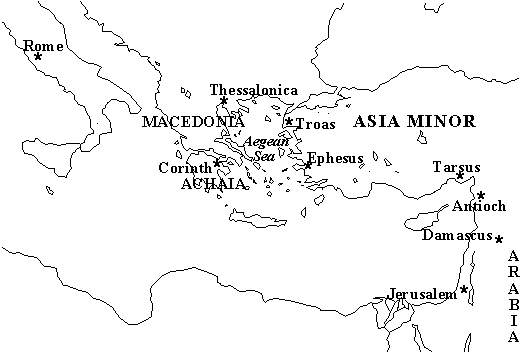
Below is a link to a map that shows the location of the capital city Rome. Jerusalem is also on the map. At the time that the apostle Paul wrote the book Romans, Jerusalem was under the control of the Roman Empire. At that time, Jerusalem was within the Roman province of Judea [joo-DEE-uh or joo-DAY-uh]. The word Judea can also be spelled Judaea or Judæa. The character æ is a ligature [LIG-uh-chuhr or LIG-uh-choor] of a and e. Before the Romans conquered the region known as Judea, the name of the country of the Jewish people was Judah. The inhabitants of Judah can be referred to as Judahites [JOO-duh-ights]. The inhabitants of Judea can be referred to as Judeans [joo-DEE-uhnz or joo-DAY-uhnz].
https://NETBible.org/media/images/constable/45Rom-1.jpg
Because it is useful to study verses in the context of the verses around them, below is content related to Romans 1.
Romans 1:1
Paul, a bondservant of Christ Jesus, called as an apostle [literally: a called apostle], set apart for the gospel of God,
Note: The gospel is the good news that the means of receiving eternal life is by believing that the Lord Jesus Christ is the Savior Who was judged on the cross for the sins of humanity.
Romans 1:2
which He promised beforehand through His prophets in the Holy Scriptures,
Romans 1:3
concerning His Son, Who was born of a seed/descendant of David according to flesh,
Romans 1:4
Who was declared the Son of God in power, according to Spirit of holiness, by means of resurrection from deaths, Jesus Christ our Lord.”
Note: In this verse, the phrase Jesus Christ our Lord is an appositive, which is a word or phrase that is in apposition to another word or phrase—in other words, that is grammatically parallel with that word or phrase and has the same referent as that word or phrase. The appositive phrase Jesus Christ our Lord refers back to the phrase the Son of God. In that regard, the content of this verse indicates that the Lord Jesus Christ is God the Son.
With regard to the Lord Jesus Christ being God the Son, the content of verse 3 and the content of 4 call attention to the hypostatic union [high-PUH-stat-ick YOON-yuhn]. The term hypostatic union refers to the Lord Jesus Christ being 100% Deity and 100% humanity. The English word hypostatic is derived from the Koine [KOI-nay] Greek word ὑπόστασις [pronounced hoo-PAH-stah-sees and transliterated as hypostasis]. The content of verse 3 references the humanity of the Lord Jesus Christ. The content of verse 4 references the Deity of the Lord Jesus Christ.
Both verse 3 and verse 4 contain the phrase according to. The parallel usage of that phrase in those two verses involves a contrast between the Lord Jesus Christʼs humanity and His Deity. The phrase according to the flesh in verse 3 calls attention to the Lord being human. In contrast, the phrase according to Spirit of holiness calls attention to the Lord being divine.
Regarding the phrase Spirit of holiness, the Deity of the Lord Jesus Christ is holy. Also, during the time of the First Advent, the Deity of the Lord Jesus Christ was unseen to humans on earth. In that regard, the Deity of the Lord Jesus Christ can be referred to as being spiritual. Regarding the foregoing, the Deity of the Lord Jesus Christ can be referenced by means of the phrase Spirit of holiness. The only verse in the New Testament in which the Koine Greek phrase that is translated as “Spirit of holiness” is found is Romans 1:4.
Regarding the contrast between the Lord Jesus Christʼs humanity and His Deity, verse 4 contains the phrase in power. That phrase calls attention to the power of the Lordʼs Deity. That calling of attention to the power of the Lordʼs Deity contrasts with the absence of calling attention to any power associated with the Lordʼs humanity. Emphasizing that contrast is the grammar of verse 3 and verse 4. In that regard, there is an absence of a definite article in front of the noun flesh in verse 3, and there is an absence of a definite article in front of the noun Spirit in verse 4. The absence of a definite article in front of a noun is known as an anarthrous construction [an-AR-thruhs kuhn-STRUHK-shuhn]. When there is an anarthrous construction, the quality of the noun is what is being emphasized in the grammar of the Koine Greek. In that regard, the contrast between the quality of the Lordʼs humanity and the quality of the Lordʼs Deity are being emphasized by Paul in the content of verses 3 and 4.
Regarding the Lord being resurrected from deaths, He died both spiritually and physically while He was on the cross. The Koine Greek noun that is translated as “deaths” in Romans 1:4 is νεκρῶν [pronounced neh-KROHN and transliterated as nekrōn]. That noun is an inflected form of the root word νεκρός [pronounced neh-KRAHS and transliterated as nekros]. In this verse, the inflected form of nekros is plural. In that regard, when the Lord Jesus Christ was on the cross, He died spiritually, and after He died spiritually, he died physically.
The Lordʼs spiritual death involved Him being judged for the sins of humanity. That judging of the Lord lasted three hours; therefore, that judging of Him was temporary. After the judging of Him was completed, the Lord died physically. Because the Lordʼs spiritual death was temporary, He was metaphorically raised from spiritual death. In that regard, God the Father judged the Lord, and God the Father ended the judging of the Lord when the Lord had been judged for every single sin of humanity. The Lordʼs physical death occurred after the Lord had been judged for every single sin of humanity. Three days after He died physically, the Lord was resurrected.
The resurrection of the Lord Jesus Christ is an indicator that the Lord is God the Son. In that sense, the resurrection of the Lord Jesus Christ declared that the Lord is God the Son. The Koine Greek verb that is translated as “declared” in this verse is ὁρισθέντος [pronounced hah-rees-THEHN-tahs and transliterated as horisthentos]. That verb is an inflected form of the root word ὁρίζω [pronounced hah-REE-dzoh and transliterated as horizō]. The Koine Greek verb horizō can be used literally to refer to marking boundaries. In that regard, the English word horizon is derived from the Greek verb horizō. The Koine Greek verb horizō can also be used figuratively. It is in the figurative sense of declaring that the verb horizō is used in Romans 1:4.
Romans 1:5
through Whom we have received grace and apostleship for the purpose of obedience of doctrine among all the Gentiles for His nameʼs sake,
Note: Unspecified in this verse and the surrounding verses is which apostles in addition to the apostle Paul are referenced by Paul in this verse. In that regard, it is possible that Paul references all of the apostles in this verse. Also, Paul references grace before referencing apostleship in this verse. In that regard, Paul calls attention to the position of apostle being a matter of grace rather than being a matter of anyone being worthy of being an apostle. Such a focus on grace can be referred to as grace orientation.
The name of someone refers to the reputation of someone. In that regard, the content of this verse indicates that one of the purposes of the position of apostle was teaching Bible doctrine—in other words, the Word of God—to Gentile believers in the Lord Jesus Christ so that those Gentile believers could obey Bible doctrine and thereby bring glory to the reputation of the Lord Jesus Christ. Being focused on the glorification of the Lord Jesus Christ can be referred to as occupation with Christ. In that regard, Paul was occupied with Christ rather than being preoccupied with Paul himself.
In this verse, the Koine Greek noun that is translated as “of doctrine” is πίστεως [pronounced PEES-teh-ohs and transliterated as pisteōs]. That noun is an inflected form of the root word πίστις [pronounced PEE-stees and transliterated as pistis]. Depending on the context, the noun pistis can be translated as either “doctrine” or “faith.” Doctrine is that in which one believes. Faith is oneʼs action of believing in something. In the context of this verse, rather than referring to the believerʼs action of believing in something, the noun pistis refers to the Bible doctrine that the believer knows.
Romans 1:6
among whom you also are the called of Jesus Christ,
Note: In this verse, the Koine Greek adjective that is translated as “called” is κλητοὶ [pronounced klay-TOI and transliterated as klētoi]. That adjective is an inflected form of the root word κλητός [pronounced klay-TAHS and transliterated as klētos]. The adjective klētos can have a connotation of privilege. In that regard, being a believer in the Lord Jesus Christ is a privilege. Paul calls attention to that privilege in this verse.
Romans 1:7
to all who are beloved of God in Rome, called as saints / holy ones / set-apart ones: grace to you and peace/prosperity from God our Father and the Lord Jesus Christ.
Note: All believers in the Lord Jesus Christ are saints. In other words, they are holy, which means that they are set apart. Believers in the Lord Jesus Christ have a relationship with the Trinity, while unbelievers lack a relationship with the Trinity. At the moment of salvation, a believer becomes a saint / holy one / set-apart one.
Romans 1:8
First, I thank my God through Jesus Christ for you all because [or concerning you all, that] your faith is being proclaimed throughout the whole world.
Note: All prayer must be addressed to God the Father, including prayers of thanks. The Lord Jesus Christ Himself indicated that all prayer must be addressed to God the Father. The content of Matthew 6:1–13 covers the Lord giving an example about how to pray. In that regard, the content of Matthew 6:9 covers the Lord commanding that prayers be addressed to God the Father. The content of Luke 11:1–4 also covers the Lord giving an example about how to pray. In that regard, the content of Luke 11:2 covers the Lord commanding that prayers be addressed to God the Father.
Romans 1:9
Indeed, God, Whom I serve in my spirit in the gospel of His Son, is my Witness as to how unceasingly I make mention of you,
Note: Regarding the word spirit in this verse, at the moment of salvation, each believer in the Lord Jesus Christ receives a human spirit, which is a believerʼs essence that involves thinking of Bible doctrine—in other words, thinking that involves the Word of God. An unbeliever lacks a human spirit. In contrast with a human spirit, a soul is a personʼs essence that involves thinking in general. Each unbeliever has a body and soul; therefore, unbelievers are dichotomous [digh-KAHT-uh-muhs]. Each believer has a body, soul, and human spirit; therefore, believers are trichotomous [trigh-KAHT-uh-muhs].
Paulʼs reference to serving God the Father in the gospel refers to Paul serving God the Father by participating in sharing the gospel with people. Paul did that by means of the Bible doctrine in Paulʼs thinking—in other words, by means of Paulʼs human spirit. The phrase of His Son after the word gospel calls attention to the fact that the gospel message is focused on the Lord Jesus Christ.
Romans 1:10
always in my prayers making request, if perhaps now at last by the will of God I may succeed in coming to you.
Note: Paul wanted to go the believers who were located in the city Rome. In that regard, when Paul wrote this epistle, his ministry to the believers in Rome was a non-face-to-face teaching ministry rather than a ministry in which he was in the presence of the congregation, preaching to them face to face.
Romans 1:11
Indeed, I long to see you so that I may share with you something from my spiritual gift that you may be established/strengthened,
Note: Based on the context of this verse and the surrounding verses, the something from Paulʼs spiritual gift referenced in this verse refers to something related to the Word of God. With regard to spiritual gifts in the sense of specialized abilities for serving God the Father, whenever Paul mentions such gifts, he uses the plural word gifts. In contrast, in Romans 1:11, Paul uses the singular word gift.
Romans 1:12
that is, that I may be encouraged together with you while among you, each of us by the otherʼs faith, both yours and mine.
Note: While Paulʼs teaching of the believers who were located in the city Rome could be done from a distance, being in the presence of the congregation would involve encouragement for both Paul and the members of that congregation.
Romans 1:13
I do not want you to be unaware, brethren, that often I have planned to come to you (and have been prevented so far) so that I may obtain some fruit among you also, even as among the rest of the Gentiles.
Note: In this verse, the word brethren refers to fellow believers in the Lord Jesus Christ. The reference to Paul obtaining fruit among the believers in the city Rome refers to those believers learning from Paulʼs teaching and thereby growing spiritually. In that regard, the word fruit in this verse refers to production in a believerʼs spiritual life. That production involves being unselfish. Believers should be unselfish as frequently as possible. In order to be unselfish, a believer must obey the Word of God. In order to obey the Word of God, a believer must learn the Word of God while in fellowship with the Trinity and thereby filled with the power of God the Holy Spirit and then apply the Word of God while in fellowship with the Trinity and thereby filled with the power of God the Holy Spirit. In that regard, once a believer commits a sin after salvation, that believer is no longer filled with the power of God the Holy Spirit and is out of fellowship with the Trinity. After that believer has confessed/acknowledged to God the Father all of that believerʼs known unconfessed post-salvation sins, fellowship with the Trinity and the filling with the power of the Holy Spirit are restored. The procedure for confessing/acknowledging to God the Father all of oneʼs known unconfessed post-salvation sins is mentioned in 1 John 1:9: “If we confess our sins, He is faithful and just to forgive us our sins and to cleanse us from all unrighteousness.” Fellowship with God the Father and God the Son is mentioned in 1 John 1. Being out of fellowship with God the Holy Spirit is referenced in Ephesians 4:30. In that regard, when a believer sins, that believer grieves the Holy Spirit. Losing the filling of the power of God the Holy Spirit is referenced in 1 Thessalonians 5:19. In that regard, when a believer sins, the power of God the Holy Spirit is quenched in that believer. After a believer has confessed/acknowledged to God the Father all of that believerʼs known unconfessed post-salvation sins, that believer is then filled with the power of God the Holy Spirit again, in fellowship with the Trinity again, and ready to learn and obey the Word of God again.
Romans 1:14
I am debtor / under obligation both to Greeks and to barbarians, both to the wise and to the foolish.
Note: The word Greeks in Romans 1:14 refers to Gentiles (non-Jewish people). The word barbarians refers to people whom Greeks considered uncivilized. Using a metaphor involving references to Greeks and barbarians, Paul was referring to seemingly civilized and seemingly uncivilized people. Also, it is noteworthy that Paul referred to Greeks and barbarians in the first half of Romans 11:14, rather than to brethren. Due to the contrast of the absence of the word brethren in Romans 1:14 when the word brethren is in Romans 1:13, it is logical to conclude that the reference to Greeks and barbarians in Romans 1:14 is a reference to all categories of unbelievers. Because unbelievers are unable to be wise, the word wise in the second half of Romans 1:14 must logically refer to believers. Because unbelievers are foolish and believers can be foolish, the word foolish in the second half of Romans 1:14 refers to foolish people without an explicit indication as to whether this refers to both foolish unbelievers and foolish believers or merely to foolish believers; however, the pairing of contrasts in the first half and the second half of Romans 1:14 is possibly indicative of the first half of the verse referring to categories of unbelievers and the second half of the verse referring to categories of believers. Regardless of whether foolish in the second half of Romans 1:14 refers to both unbelievers and believers or only to believers, the sum total of Romans 1:14 covers unbelievers (who are foolish by their very nature of being unbelievers), wise believers, and foolish believers. Paul recognized that it was his duty to communicate the Word of God to all categories of unbelievers, to wise believers, and to foolish believers.
Paul was a communicator of the Word of God. He had a spiritual gift or spiritual gifts suited to the tasks of communicating. His communication to fools is consistent with the principle found in Proverbs 23:9, which reads as follows: “Do not speak in the ears of a fool, for he despises the wisdom of your words.” Proverbs 23:9 is an admonition/warning about communicating truth in the presence of a fool. Men with communication gifts have been assigned by God the Father the job of communicating. The communicating can be directed to groups of people, whether the communicating is done in verbal or written form. In that context, the communicator is addressing an audience that can involve multiple people. Such a context appears to be different from the context of Proverbs 23:9, which appears to involve a context of a personal, one-to-one nature, although it could have a broader application to people nearby who might overhear a conversation. What is absent from Proverbs 23:9 is any sort of context involving group instruction. Regarding that, when a believer with a communication gift communicates the Word of God—whether in verbal or written form—God the Holy Spirit provides the power for the communication of the message if the communicator is in fellowship with the Trinity when that communicator is engaged in the communicating.
Regarding the communicating of the Word of God, below is content related to Hebrews 4:12:
Hebrews 4:12
“Indeed, the Word of God is alive and powerful, sharper than any two-edged sword, piercing even to the dividing asunder of the soul and the spirit and of the joints and the marrow and is a critic of thoughts and intents of the heart.”
Also regarding the communicating of the Word of God, below is content related to 2 Timothy 3:16–17:
2 Timothy 3:16–17
“All Scripture is God breathed and is profitable for doctrine, for reproof, for correction, for instruction in righteousness, that the man of God might be mature, having been thoroughly furnished unto all good work.”
If communicating on a personal, one-to-one basis with someone who might be foolish, a man with a communication gift should be careful to heed the principle of Proverbs 23:9. He can heed it by sticking to the gospel if he is unsure as to whether the foolish person is a believer and by sticking to 1 John 1:9 if he is confident that the foolish person is a believer. Similarly, a believer with a gift or gifts other than communication gifts should stick to the gospel if he or she is unsure as to whether the foolish person is a believer, and such a believer communicating with a foolish person should stick to 1 John 1:9 if he or she is confident that the foolish person is a believer.
Romans 1:15
In this manner, for my part, I am eager to preach the good news to you also who are in Rome.
Note: In this verse, the phrase good news refers to Bible doctrine—in other words, the Word of God. That can include the gospel but can also can include other content of the Word of God.
Romans 1:16
Indeed, I am not ashamed of the gospel, for it is the power of God for salvation to everyone who believes, to the Jew first and also to the Greek.
Note: As mentioned in the note for Romans 1:1, the gospel is the good news that the means of receiving eternal life is by believing that the Lord Jesus Christ is the Savior Who was judged on the cross for the sins of humanity. Regarding the gospel, absent from Romans 1:16 and the surrounding verses is anything indicating that anything other than the gospel is the power for salvation. In addition, absent from Romans 1:16 and the surrounding verses is anything indicating that any power other than the power of God is involved in salvation. In that regard, the content of this verse indicates that the receiving of eternal life occurs without any involvement from the power of the person being saved.
Regarding the word translated as “power” in Romans 1:16, the Koine [KOI-nay] Greek word from which the English word power is translated is δύναμις [pronounced DOO-nah-mees and transliterated as dynamis]. That word is an inflected form of the root word δύναμις [pronounced DOO-nah-mees and transliterated as dynamis]. The Greek word dynamis is the word from which the English word dynamite is derived.
As with the word Greeks in Romans 1:14, the word Greek in Romans 1:16 refers to Gentiles. Gentiles are non-Jewish people. While the gospel message went to Jews first, absent from the Bible is anything indicating that believers in the Lord Jesus Christ must share the gospel with Jewish people first before sharing the gospel with Gentile people. In that regard, believers should share the gospel with whomever whenever the opportunity to share the gospel arises.
Romans 1:17
Indeed, in it righteousness/justice of God is revealed from / by means of faith to faith/doctrine, as it is written: “HOWEVER, THE RIGHTEOUS WILL LIVE BY FAITH/DOCTRINE.”
Note: In this verse, the pronoun it refers to the gospel. In that regard, the righteousness/justice of God the Father is revealed in the gospel. Regarding the words righteousness and justice, the word righteousness refers to God the Father being perfectly good, and the word justice refers to God the Father being perfectly fair. The righteousness and justice of God the Father are related in that the reason God the Father is perfectly just is because He is perfectly righteous.
The Koine Greek noun that is translated as “righteousness” or “justice” in this verse is δικαιοσύνη [pronounced dee-kigh-ah-SOO-nay and transliterated as dikaiosynē]. That noun is an inflected form of the root word δικαιοσύνη [pronounced dee-kigh-ah-SOO-nay and transliterated as dikaiosynē]. Also, in this verse, there is an absence of a definite article in front of the noun dikaiosynē. As mentioned in the notes for verse 4, the absence of a definite article in front of a noun is known as an anarthrous construction. When there is an anarthrous construction, the quality of the noun is what is being emphasized in the grammar of the Koine Greek. In that regard, the quality of the righteousness/justice of God is being emphasized in this verse.
In the phrase faith to faith/doctrine in this verse, the Koine Greek noun that is translated as “faith” is πίστεως [pronounced PEES-teh-ohs and transliterated as pisteōs]. That noun is an inflected form of the root word πίστις [pronounced PEES-tees and transliterated as pistis]. Also, the Koine Greek noun that is translated as “faith” or “doctrine” is πίστιν [pronounced PEES-teen and transliterated as pistin]. That noun is an inflected form of the root word pronounced PEES-tees and transliterated as pistis]. While both the noun pisteōs and the noun pistin are inflected forms of pistis, the translations of those two inflected forms are different in the context of this verse. In that regard, Paul sometimes used a play on words.
Regarding Paulʼs use of a play on words in Romans 1:17, the noun pistis can be used to refer to faith or to doctrine, depending on the context. In that regard, the word faith refers to oneʼs action of believing in something, and the word doctrine refers to that in which one believes. In the context of this verse, the word doctrine refers to Bible doctrine, which is the Word of God.
Regarding how faith to faith/doctrine is related to the revealing of the righteousness/justice of God in the gospel, the clue to that is provided in the quote in this verse. That quote refers to the content of Habakkuk 2:4. Below is content related to Habakkuk 2:4.
Habakkuk 2:4
“Behold, as for the one who has been proud / whose soul has swelled, his soul has not been upright within him, but the righteous lives by his faith/faithfulness.”
Whereas the content of Habakkuk 2:4 is focused on the faith or faithfulness of a believer rather than the Bible doctrine in which the believer believes, it is possible that, in Romans 1:17, Paul focuses on the Bible doctrine in which the believer believes. Regardless of whether the content of Romans 1:17 involves Paul focusing on the faith of a believer or on the Bible doctrine in which the believer believes, the faith of a believer involves believing Bible doctrine, and in order for a believer to utilize Bible doctrine, a believer must have faith in Bible doctrine. Getting back to how faith to faith/doctrine is related to the revealing of the righteousness/justice of God in the gospel, when an unbeliever believes in the Lord Jesus Christ as the Savior—thereby becoming a believer—and then regularly learns and obeys the Word of God, the faith in the Word of God that is exhibited by that believer calls attention to the fact that that believer has become a different person for the better.
The beginning of a believer becoming a different person for the better occurs at the moment that the believer believes in the Lord Jesus Christ as the Savior. In that regard, the gospel is the message that has the information that an unbeliever needs in order to know how to have eternal life. Therefore, the life of a believer who regularly learns and obeys the Word of God can call attention to the gospel. In that regard, people who become aware of a believer who regularly learns and obeys the Word of God will notice that God the Father is good to that believer, even when that person experiences suffering. Also, in noticing that God the Father is good to that believer, the people doing the noticing will thereby notice that God the Father is fair to that believer. The noticing of God the Father being good and fair to the believer who regularly learns and obeys the Word of God can thereby result in the noticing that the gospel is a manifestation of the righteousness and justice of God the Father because the believer became a believer as a result of believing the message of the gospel.
Of course, when the people who become aware of such a believer are unbelievers or are believers who refrain from learning and obeying the Word of God regularly, those people will lack complete understanding regarding the righteousness and justice of God the Father. Even though unbelievers lack complete understanding regarding the righteousness and justice of God the Father, when the life of a believer who regularly learns and obeys the Word of God calls attention to the righteousness and justice of God the Father being manifested by the gospel, enough of the righteousness and justice of God the Father is revealed to those unbelievers for them to understand that the means of receiving eternal life is by believing that the Lord Jesus Christ is the Savior Who was judged on the cross for the sins of humanity. Those unbelievers then make free-will choices about whether to believe in the Lord Jesus Christ as the Savior or to reject Him.
Not only can humans become aware of a believer who learns and obeys the Word of God regularly, but also angels can become aware of such a believer. In that regard, angels who become aware of a believer who regularly learns and obeys the Word of God will notice that God the Father is good to that believer. Likewise, angels who become aware of a believer who regularly learns and obeys the Word of God will notice that God the Father is fair to that believer.
Romans 1:18
Indeed, the wrath of God is revealed from Heaven against all ungodliness and unrighteousness of men who suppress the truth in / by means of unrighteousness
Note: Heaven with a capital H is also known as the Third Heaven or Third Heavens, which is where the throne room of God the Father is located. The term second heavens (also known as second heaven) refers to outer space. The term first heavens (also known as first heaven) refers to the atmosphere of the earth.
Romans 1:19
because that which is known about God is evident among/within them, for God made it evident to them.
Note: Unspecified in this verse and the surrounding verses is whether that which God the Father made evident about Himself is evident among people or in them. If the content of this verse refers to that which God the Father made evident about Himself being evident among people, then this verse calls attention to the fact that evidence of the existence of God the Father is noticeable all around people. If the content of this verse refers to that which God the Father made evident about Himself being evident within people, then this verse calls attention to there being in the thinking of people evidence of the existence of God the Father. Either way, this verse indicates that all people except for the people who never reach the age of accountability become aware of evidence of the existence of God the Father. Regarding the age of accountability, for each person who at some time in that personʼs life has the mental capacity to make a decision about whether or not to believe in the Lord Jesus Christ as the Savior, the age of that person when that person first had the mental capacity to make a decision about whether or not to believe in the Lord Jesus Christ as the Savior can be referred to as the age of accountability of that person. The age of accountability varies for each individual person.
Content in 2 Samuel 12:23 indicates that a person who dies before that person has reached the age of accountability receives eternal life. The content of that verse references King David recognizing that when David died, he would be with his son who had died as a baby. Below is content related to 2 Samuel 12:22–23.
Note: In the below content of 2 Samuel 12:22, the pronoun he refers to David.
2 Samuel 12:22
Then he says, “While the child was still alive, I have fasted, and I weep, for I have said, ‘Who knows? Jehovah / Yahweh / I am I am / the existing One has been gracious to me, and the child has lived.’
Note: The uses of a present tense in the verb says and the verb weep reference what has occurred in the past. Such uses of a present tense have a rhetorical effect. In that regard, using a verb in a present tense to refer to the past can help a reader or hearer of the Word of God imagine past events as though the reader or hearer is watching those events as they occur.
2 Samuel 12:23
“However, now he has died; why should I fast? Am I able to bring him back again? I am going to him, but he does not return to me.”
Note: David indicated that he recognized that he would later be with his son who had died as a baby. In that regard, David indicated that he recognized that the means by which David would be with that deceased son involved David going to be with that deceased son when David would die rather than that deceased son coming back to be with David before David died. David is eternally saved; therefore, the content of this verse indicates that Davidʼs son who had died as a baby is also eternally saved.
Romans 1:20
Indeed, since the creation of the world, His invisible attributes, His eternal power and divine nature, have been clearly seen / clearly perceived, being understood through what has been made, so that they are without excuse.
Note: In this verse, the reference to seeing clearly is in the sense of perceiving clearly. The people who deny the existence of God the Father have zero excuses for denying the existence of God the Father.
Romans 1:21
Inasmuch as they knew God, they did not honor/glorify Him as God nor give thanks, but they became futile in their speculations, and their foolish heart was darkened.
Note: Also, as mentioned in the notes for verse 8, all prayer must be addressed to God the Father, including prayers of thanks. The Lord Jesus Christ Himself indicated that all prayer must be addressed to God the Father. The content of Matthew 6:1–13 covers the Lord giving an example about how to pray. In that regard, the content of Matthew 6:9 covers the Lord commanding that prayers be addressed to God the Father. The content of Luke 11:1–4 also covers the Lord giving an example about how to pray. In that regard, the content of Luke 11:2 covers the Lord commanding that prayers be addressed to God the Father.
The heart refers to the mind. In that regard, the content of Romans 1:21 calls attention to the fact that a person who refrains from learning and obeying the Word of God has thinking that is darkened. The condition of that person can be referred to as blackout of the soul.
Romans 1:22
Professing to be wise, they became fools
Note: Such people claim to be wise, but they are actually fools.
Romans 1:23
and exchanged the glory of the incorruptible God for an image in the form of corruptible man and of birds and four-footed animals and crawling creatures / reptiles.
Note: Some people worship idols. In that regard, there are various forms of idols. Some idols are three-dimensional. Some idols are two-dimensional—in other words, they involve an image on something flat. Also, some people worship humans other than the Lord Jesus Christ. The worshiping of humans other than the Lord Jesus Christ can be referred to as idolizing. In that regard, some people idolize actors, actresses, singers, athletes, or other celebrities. Likewise, some people idolize famous people of the past. Also, some people idolize people who arenʼt famous. Some people even idolize themselves. In addition, some people worship an angel or angels.
Absent from the Bible is any description of what the Lord Jesus Christ looks like. Likewise, absent from the Bible is anything indicating that people should make any images depicting the Lord Jesus Christ. Furthermore, absent from the Bible is anything indicating that people should portray the the Lord Jesus Christ. Any attempt to depict the Lord Jesus Christ by means of an image is a violation of the principle found in Romans 1:23. Likewise, any attempt to portray the Lord Jesus Christ is a violation of the principle found in Romans 1:23.
Romans 1:24
Therefore, God gave them over in the lusts of their hearts to impurity, so that their bodies would be dishonored among them
Note: The heart refers to the mind.
Romans 1:25
in that they exchanged the truth of God for the lie and worshiped and served the creature rather than the Creator, Who is blessed forever [literally: unto the ages]. Amen.
Note: God the Son is the Member of the Trinity Who created Creation. That topic is covered in John 1. The Lord Jesus Christ is God the Son. In that regard, the word Creator in Romans 1:25 refers to the Lord Jesus Christ.
Romans 1:26
For this reason, God gave them over to degrading passions, for their women exchanged the natural function for that which is unnatural / against nature / contrary to nature,
Romans 1:27
and in the same way also, the men abandoned the natural function of the woman and burned in their desire toward one another, men with men committing the shame / the unseemly deed and receiving in themselves the due penalty of their error.
Note: The content of Romans 1:26 refers to women desiring to have sex with one or more women, and the content of Romans 1:26 also refers to women having sex with one or more women. The content of Romans 1:27 refers to men desiring to have sex with one or more men, and the content of Romans 1:27 also refers to men having sex with one or more men. In that regard, the content of verses 26 and 27 indicates that homosexual desires and homosexual acts are sinful. Absent from these two verses and the surrounding verses is anything indicating that any people are born homosexual. Indeed, the content of verses 26 and 27 explicitly indicates that homosexuality is unnatural.
When a person believes in the Lord Jesus Christ as the Savior, God the Father forgives the believer for all of the sins that that believer had committed before believing in the Lord Jesus Christ as the Savior. Once a believer commits a sin after salvation, that believer is no longer filled with the power of God the Holy Spirit and is out of fellowship with the Trinity. After that believer has confessed/acknowledged to God the Father all of that believerʼs known unconfessed post-salvation sins, fellowship with the Trinity and the filling with the power of the Holy Spirit are restored. The procedure for confessing/acknowledging to God the Father all of oneʼs known unconfessed post-salvation sins is mentioned in 1 John 1:9: “If we confess our sins, He is faithful and just to forgive us our sins and to cleanse us from all unrighteousness.” Fellowship with God the Father and God the Son is mentioned in 1 John 1. Being out of fellowship with God the Holy Spirit is referenced in Ephesians 4:30. In that regard, when a believer sins, that believer grieves the Holy Spirit. Losing the filling of the power of God the Holy Spirit is referenced in 1 Thessalonians 5:19. In that regard, when a believer sins, the power of God the Holy Spirit is quenched in that believer. After a believer has confessed/acknowledged to God the Father all of that believerʼs known unconfessed post-salvation sins, that believer is then filled with the power of God the Holy Spirit again and in fellowship with the Trinity again.
Romans 1:28
Also, just as they did not see fit to have God in epignōsis knowledge any longer, God gave them over to a depraved mind, to do those things which are not proper,
Note: God the Father permits each person to use his or her volition (free will). The phrase epignōsis knowledge found in the above translation is a translation of the Koine Greek noun ἐπιγνώσει [pronounced eh-pee-KNOW-say and transliterated epignōsei]. That noun is an inflected form of the root word ἐπίγνωσις [pronounced eh-PEE-know-sees and transliterated as epignōsis (some people leave the macron off the o and transliterate the word as epignosis)]. In the New American Standard Bible 1995 (NASB 1995) and New American Standard Bible 2020 (NASB 2020) translations of various verses, the word epignōsis is translated as “knowledge,” “real knowledge,” and “true knowledge.” Sometimes, the NASB 1995 and NASB 2020 translations also have footnotes indicating that epignōsis can be translated as “recognition.” When precisely translated, rather than simply referring to knowledge, the word epignōsis refers to that which is above or beyond ordinary knowledge. The Koine Greek word for ordinary knowledge is γνῶσις [pronounced KNOW-sees and transliterated as gnōsis or gnosis]. In the Bible, epignōsis is used to refer to knowledge of the Word of God. An unbeliever to whom the gospel is communicated has epignōsis knowledge of the gospel at the moment that the gospel is communicated to that unbeliever because God the Holy Spirit makes the gospel clear to each unbeliever to whom the gospel is communicated.
Romans 1:29
being filled with all unrighteousness, wickedness, greed, evil; full of envy, murder, strife, deceit, malice; they are gossips,
Note: Below are some links related to the content of Romans 1:29. The content at the below links provides details that can help have a fuller appreciation for some of that which is referenced in Romans 1:29.
https://www.BLBClassic.org/lang/lexicon/Lexicon.cfm?Strongs=G93&t=NASB95
https://www.BLBClassic.org/lang/lexicon/Lexicon.cfm?Strongs=G4189&t=NASB95
https://www.BLBClassic.org/lang/lexicon/Lexicon.cfm?Strongs=G4124&t=NASB95
https://www.BLBClassic.org/lang/lexicon/Lexicon.cfm?Strongs=G2549&t=NASB95
https://www.BLBClassic.org/lang/lexicon/Lexicon.cfm?Strongs=G3324&t=NASB95
https://www.BLBClassic.org/lang/lexicon/Lexicon.cfm?Strongs=G5355&t=NASB95
https://www.BLBClassic.org/lang/lexicon/Lexicon.cfm?Strongs=G5408&t=NASB95
https://www.BLBClassic.org/lang/lexicon/Lexicon.cfm?Strongs=G2054&t=NASB95
https://www.BLBClassic.org/lang/lexicon/Lexicon.cfm?Strongs=G1388&t=NASB95
https://www.BLBClassic.org/lang/lexicon/Lexicon.cfm?Strongs=G2550&t=NASB95
https://www.BLBClassic.org/lang/lexicon/Lexicon.cfm?Strongs=G5588&t=NASB95
Romans 1:30
slanderers, haters of God / hateful to God, insolent, arrogant, boastful, inventors of evil, disobedient to parents,
Note: Below are some links related to the content of Romans 1:30. The content at the below links provides details that can help have a fuller appreciation for some of that which is referenced in Romans 1:30.
https://www.BLBClassic.org/lang/lexicon/Lexicon.cfm?Strongs=G2637&t=NASB95
https://www.BLBClassic.org/lang/lexicon/Lexicon.cfm?Strongs=G2319&t=NASB95
https://www.BLBClassic.org/lang/lexicon/Lexicon.cfm?Strongs=G5197&t=NASB95
https://www.BLBClassic.org/lang/lexicon/Lexicon.cfm?Strongs=G5244&t=NASB95
https://www.BLBClassic.org/lang/lexicon/Lexicon.cfm?Strongs=G213&t=NASB95
The first below link is related to the second below link. The two of them are related to the phrase inventors of evil.
https://www.BLBClassic.org/lang/lexicon/Lexicon.cfm?Strongs=G2182&t=NASB95
https://www.BLBClassic.org/lang/lexicon/Lexicon.cfm?Strongs=G2556&t=NASB95
The first below link is related to the second below link. The two of them are related to the phrase disobedient to parents.
https://www.BLBClassic.org/lang/lexicon/Lexicon.cfm?Strongs=G545&t=NASB95
https://www.BLBClassic.org/lang/lexicon/Lexicon.cfm?Strongs=G1118&t=NASB95
Romans 1:31
without understanding, untrustworthy, unloving, unmerciful.
Below are some links related to the content of Romans 1:31. The content at the below links provides details that can help have a fuller appreciation for some of that which is referenced in Romans 1:31.
https://www.BLBClassic.org/lang/lexicon/Lexicon.cfm?Strongs=G801&t=NASB95
https://www.BLBClassic.org/lang/lexicon/Lexicon.cfm?Strongs=G802&t=NASB95
https://www.BLBClassic.org/lang/lexicon/Lexicon.cfm?Strongs=G794&t=NASB95
https://www.BLBClassic.org/lang/lexicon/Lexicon.cfm?Strongs=G415&t=NASB95
Romans 1:32
Whereas they know the ordinance of God, that those who practice such things are worthy of death, they not only do the same but also give hearty approval to those who practice them.
Note: The people referenced in this verse do what is referenced in verses 28–31 and give hearty approval to those who do what is referenced in verses 28–31.
Sincerely,
John