Links: On-Screen Version | Homepage | Rapture Letter | Verses of the Day | Site Map
“As Moses lifted up the serpent [the serpent made of bronze described in Numbers 21:8–9] in the wilderness, even so must the Son of Man be lifted up, so that whosoever believes in Him will have eternal life, for God so loved the world, that He gave His only begotten [uniquely born] Son, that whosoever believes in Him shall not perish but have eternal life.”
“…for by grace you are saved through faith and that not of yourselves; it is the gift of God, not as a result of works, lest any man should boast.”
Above is the content of John 3:14–16 and the content of Ephesians 2:8–9, respectively. Itʼs worthwhile to refrain from receiving the mark referenced in Revelation 13:11–18 and to instead receive eternal life for free by believing that Jesus is the Savior. Before doing any Bible studying and before praying to God the Father, it is useful for a person who has believed in the Lord Jesus Christ as the Savior to try to think of any sins that one might have committed since one last confessed oneʼs known post-salvation sins to God the Father, and if one has indeed committed any, to then silently confess those sins to God the Father—confessing only one time for each sin—in accordance with what is mentioned in 1 John 1:9:
“If we confess our sins, He is faithful and just to forgive us our sins and to cleanse us from all unrighteousness.”
This webpage could be periodically updated. If there is a mass disappearance of people professing to be Christians, and if the original author of this webpage is amongst those people disappearing en masse, then it is possible that this webpage will no longer be updated. Also, if there is a mass disappearance of people professing to be Christians, it is worthwhile to consider the possibility that those people have exited from the earth on the occasion known as the Rapture instead of assuming that that mass disappearance involves extraterrestrials abducting those people or involves the annihilation of those people or involves anything else other than the Rapture.
Below are links related to archived copies of this webpage.
archive.is/John314-16.com/Ephesians_1-18_and_the_Other_Verses_of_Ephesians_1-Print_Version.html
archive.ph/John314-16.com/Ephesians_1-18_and_the_Other_Verses_of_Ephesians_1-Print_Version.html
Also, it is possible that it is worthwhile to print this content in case of time periods involving lack of Internet connectivity.
When studying the Word of God, it is beneficial to keep in mind the content of Hebrews 4:12:
“Indeed, the Word of God is alive and powerful, sharper than any two-edged sword, piercing even to the dividing asunder of the soul and the spirit and of the joints and the marrow and is a critic of thoughts and intents of the heart.”
Note: The heart refers to the mind.
It is also beneficial to keep in mind the content of 2 Timothy 3:16–17 when studying the Word of God:
“All Scripture is God breathed and is profitable for doctrine, for reproof, for correction, for instruction in righteousness, that the man of God might be mature, having been thoroughly furnished unto all good work.”
It is the responsibility of a pastor-teacher to endeavor to correctly understand the Word of God and then to accurately teach the Word of God, as per the content of 2 Timothy 2:15:
“Be diligent to present yourself approved to God as a workman who does not need to be ashamed, accurately handling the Word of Truth.”
A pastor-teacher is a communicator rather than a crutch on which to be leaned. In that regard, a believer in the Lord Jesus Christ should refrain from putting oneʼs trust in and thereby serving as a devoted follower of and thus worshiping a pastor-teacher. Likewise, a believer should refrain from putting oneʼs trust in and thereby serving as a devoted follower of and thus worshiping anyone other than the Trinity [God the Father, God the Son, and God the Holy Spirit], as per Joshua 24:15, the content of which references Joshua speaking to the Israelites:
If it is disagreeable/bad/evil/wrong/wretchedness/displeasing in your sight to serve/worship Jehovah / Yahweh / I am I am / the existing One, choose for yourselves today whom you serve/worship: whether the gods ['elohiym / false gods] which your fathers have served/worshiped which were beyond the river or the gods ['elohiym / false gods] of the Amorites in whose land you are living. As for me and my house, we serve/worship Jehovah / Yahweh / I am I am / the existing One.
Note: Joshua, the leader of the Israelites after Joshua had been serving as the assistant of Moses while Moses was the leader of the Israelites, set the example for the Israelites. Joshua chose to put his trust in and thereby serve as a devoted follower of and thus worship God the Father rather than Joshua choosing to put his trust in and thereby serve as a devoted follower of and thus worship the lesser of multiple evils amongst multiple choices of 'elohiym [el-oh-HEEM]. The word 'elohiym with a lowercase e can refer to false gods, to angels, or to human rulers or judges. The word 'Elohiym with a capital E refers to the Trinity. The word 'elohiym can also be used to refer to might as in mightiness. In that regard, the use of the word 'elohiym in reference to false gods, to angels, or to human rulers or judges involves the connotation of mightiness in comparison to an average human. When a person puts oneʼs trust in and thereby serves as a devoted follower of and thus worships an angel or human, that angel or human is that personʼs false god. Regarding the foregoing, the content of Joshua 24:15 involves Joshua calling attention to the choices that the Israelites had, and that content involves Joshua permitting the Israelites to make their choices while Joshua led by example with his choice.
The gift of pastor-teacher is for the purpose of each pastor-teacher functioning as a messenger who communicates the Word of God rather than functioning as a priest between the Trinity and mankind. In that regard, the time period that can be referred to as the Church Age started fifty days after the Lord Jesus Christ was resurrected, and all Church Age believers in the Lord Jesus Christ are priests. The Lord Jesus Christ is the High Priest of Church Age believers, and believers should be willing to acknowledge/confess/profess to people the believersʼ faith in the Lord Jesus Christ, as per Hebrews 4:14–15:
Therefore, since we have a great High Priest Who has passed through the heavens, Jesus the Son of God, let us hold fast the acknowledgment/confession/profession. Indeed, we do not have a high priest who cannot sympathize with our weaknesses, but One Who has been tempted in all things as we are, yet without sin.
Also, the Lord Jesus Christ is the High Priest according to the order of Melchizedek [mel-KIZ-uh-dek], who was the ruler of Salem when Abraham was still named Abram. Melchizedek was both a king and a priest, as per Genesis 14:18, which references Melchizedek greeting Abram:
Then Melchizedek king of Salem has brought out bread and wine, and he is a priest of 'El [AYL] 'Elyown [el-YOHN] / God [focusing on God the Fatherʼs power] Most High.
The Lord Jesus Christ is also both a king and a priest because the Lord is the Priest according to the order of Melchizedek, as per Hebrews 7:14–17:
Indeed, it is evident that our Lord has arisen from Judah, a tribe with reference to which Moses spoke nothing concerning priests. Also, it is still much more evident: that according to the similarity of Melchizedek, Another of a different type of priest arises, Who has become such not on the basis of a law of fleshly command / physical requirement but according to the power of an indestructible life. Indeed, it is attested: “YOU ARE A PRIEST FOREVER, ACCORDING TO THE ORDER OF MELCHIZEDEK.”
Note: The Lord Jesus Christ is from the tribe of Judah. Also, the Lord Jesus Christ is qualified to be a priest because He was resurrected and therefore has an indestructible body. The above content in all capital letters is a reference to Psalm 110:4.
Because a king is royalty, a king who is a priest is a royal priest. In that regard, Church Age believers are royalty because they are members of the Lord Jesus Christʼs family. Therefore, all Church Age believers are royal priests, as per 1 Peter 2:9–10:
However, you are A CHOSEN PEOPLE, A royal PRIESTHOOD, A HOLY NATION, A PEOPLE FOR ACQUISITION/PRESERVATION, so that you may proclaim the excellencies of Him Who has called you out of darkness into His marvelous light, for you once were NOT A PEOPLE, but now you are GODʼS PEOPLE. You had NOT RECEIVED MERCY, but now you have RECEIVED MERCY.
Note: Before the Church Age, Gentiles were not Godʼs people. In the Church Age, both Jewish and Gentile believers are Godʼs people. The content of 1 Peter 2:10 references Hosea 2:23. In that regard, Peter uses references involving Israel in the Old Testament to refer to Church Age believers.
Itʼs the message rather than the messenger that should be the focus of the believer in the Lord Jesus Christ. Put succinctly: itʼs the message rather than the messenger. In that regard, it is beneficial to keep in mind the content of Revelation 22:8–9, which was written by the apostle John, who, in addition to writing The Revelation to John, wrote The Gospel According to John, The First Epistle of John, The Second Epistle of John, and The Third Epistle of John:
I, John, am the one who heard and saw these things, and when I heard and saw, I fell down to worship at the feet of the angel who showed me these things, but he says* to me, “Do not do that. I am a fellow servant of yours and of your brethren the prophets and of those who keep the words of this book. Worship God.”
*Note: The word says is in the Greek historical present tense. By means of the Greek historical present tense, past action or future action can be described from the perspective of someone seeing the action as it occurs.
Regarding messages, believers should use the Word of God to examine what is being communicated. That is what the Bereans who are mentioned in Acts 17:10–12 did:
The brethren immediately sent Paul and Silas away by night to Berea, who, when they arrived, went into the synagogue of the Jews. Now these were more noble-minded than those in Thessalonica, who received the word with all eagerness / readiness of mind, examining the Scriptures daily to see whether these things were so. Therefore, many of them believed, and not a few prominent Greek women and men.
Note: The phrase not a few means “quite a few.”
Today, the return of the Lord Jesus Christ to meet believers in the Lord Jesus Christ in the clouds on the occasion of the Rapture is one day closer than it was yesterday. The Rapture involves both deceased and living believers in the Lord Jesus Christ meeting the Lord in the clouds in the atmosphere of the earth, receiving glorified immortal resurrection bodies similar to the Lord Jesus Christʼs glorified resurrection body, and going to Heaven with those resurrection bodies. Before the Rapture occurs, deceased believers in the Lord Jesus Christ are in Heaven without glorified bodies. It is possible that the Rapture will occur during the time when the Feast of Trumpets / Yom Teruah [yahm tuh-ROO-uh or yohm tuh-ROO-uh] would occur. The Feast of Trumpets was one of the seven feasts that the Israelites were supposed to celebrate each year under the regulations of the Mosaic Law. The term Mosaic Law refers to the laws communicated by Moses to the ancient Israelites. Because Moses communicated those laws, they are known collectively as the Mosaic Law. The Lord Jesus Christ fulfilled the Mosaic Law by being judged on the cross for the sins of humanity. Now that the Lord Jesus Christ has fulfilled the Mosaic Law, no believers in the Lord Jesus Christ are under the regulations of the Mosaic Law.
While it is possible that the Rapture will occur during the time when the Feast of Trumpets / Yom Teruah [yahm tuh-ROO-uh or yohm tuh-ROO-uh] would occur—which is referenced as a single day in Leviticus 23:24–25 and Numbers 29:1–6 and which is what some people call Rosh Hashanah and which some people celebrate for two days—the next occurrence of which will possibly be during August, September, or October of 2027, it is worthwhile for believers in the Lord Jesus Christ to get into the habit of being prepared every day for the return of the Lord, just in case the Rapture will occur during a time other than the time of the Feast of Trumpets / Yom Teruah / Rosh Hashanah. Furthermore, it is worthwhile to be in the habit of being prepared for the Rapture so that if it does occur during the time of the Feast of Trumpets / Yom Teruah / Rosh Hashanah, one can be prepared for that time because of already being in the habit of being prepared. Examples of being prepared for the Rapture include applying the content of 1 John 1:9 whenever one sins, being unselfish, and whenever circumstances are such that an opportunity arises, sharing the gospel—the good news that believing that the Lord Jesus Christ is the Savior Who was judged on the cross for the sins of humanity is the means by which a person is able to have eternal life. Regarding sharing the gospel, one could also have a written or printed message containing the gospel with that written or printed message located somewhere where it could be easily noticed so that if a person or people were to read or hear that written or printed message either before or after the Rapture occurs, that person or people would thereby read or hear the gospel by means of that written or printed message.
Whether the Feast of Trumpets / Yom Teruah / Rosh Hashanah in 2027 is during August, September, or October depends on whether barley crop in Israel in 2027 is first in a status known as abib [ah-BEEB] (also known as aviv [ah-VEEV]) in February, March, or April. On which day and at what time in August, September, or October the Feast of Trumpets / Yom Teruah / Rosh Hashanah would start depends on the time of the last sunset over Jerusalem before the first sliver of a crescent new moon after that sunset. The crescent new moon is the illumination of a sliver of the waxing moon. The moon is waxing when it is becoming more and more illuminated after what some people refer to as the astronomical new moon, the time when there is an absence of illumination of the moon—in other words, when there is an absence of reflection of light from the moon. On which day and at what time in August, September, or October the Feast of Trumpets / Yom Teruah / Rosh Hashanah would end depends on whether the Feast of Trumpets / Yom Teruah / Rosh Hashanah lasts one day or two days and whether the time of day of the end of the Feast of Trumpets / Yom Teruah / Rosh Hashanah is at sunset, at the end of civil twilight, at the end of nautical twilight, or at the end of astronomical twilight.
Regarding information about the Rapture, it is beneficial to keep in mind the content of 1 Thessalonians 4:13–18 and 1 Corinthians 15:51–52:
1 Thessalonians 4:13–18
Now we do not want you to be uninformed, brethren, about those who are asleep, so that you will not grieve as do the rest who have no hope, for if we believe that Jesus died and rose again—and we do indeed believe that Jesus died and rose again—so also God will bring with Him those who have fallen asleep through Jesus. Indeed, this we say to you by the word of the Lord, that we who are alive who remain until the coming of the Lord will not precede those who have fallen asleep, for the Lord Himself will descend from heaven with a shout of command, with a voice of an archangel and with a trumpet of God, and the dead in Christ will rise first. Then we who are alive who remain will be caught up together with them in the clouds to meet the Lord in the air, and so we shall always be with the Lord. Therefore, comfort one another with these words.
1 Corinthians 15:51–52
Behold, I tell you a mystery: we will not all sleep, but we will all be changed, in a moment, in a twinkling of an eye, at the last trumpet, for a trumpet will sound, and the dead will be raised incorruptible, and we will be changed.
After the Rapture will be the seven-year Tribulation. The believers who will be alive on the earth when the Rapture occurs will escape the Tribulation. 1 Thessalonians 5:1–11 covers that topic. In that regard, in the book 1 Thessalonians, the content of 1 Thessalonians 4:13–18 is immediately followed by the content of 1 Thessalonians 5:1–11.
1 Thessalonians 5:1–11
Now as to the times and the epochs, brethren, you have no need of anything to be written to you, for you yourselves know full well that the day of the Lord is coming just like a thief in the night. While they are saying, “Peace and safety!” then sudden destruction comes upon them like labor pains upon a woman with child, and they will not escape. However, you, brethren, are not in darkness, that the day would overtake you like a thief, for you are all sons of light and sons of day. We are not of night nor of darkness; therefore, let us not sleep as others, but let us be alert and sober. Indeed, those who sleep do their sleeping at night, and those who get drunk get drunk at night. However, since we are of day, let us be sober, having put on the breastplate of faith and benevolence/goodwill, and as a helmet, the hope / absolute confidence of deliverance, for God has not destined us for wrath but for obtaining deliverance through our Lord Jesus Christ, Who died for us, so that whether we are awake or asleep, we will live together with Him. Therefore, comfort one another and edify one another, just as you also are doing.
Note: In this context, the day of the Lord is the time period that consists of the Rapture, the seven years of the Tribulation, and the Second Advent. In that regard, deliverance from the Tribulation is the deliverance in this context. Also, unspecified is who will be saying “Peace and safety!” In this context, sleeping refers to a lack of alertness. The alertness in this context involves being ready for the Rapture. In order to be ready for the Rapture, a believer needs to be filled with the power of God the Holy Spirit and to pay attention for historical trends such as people saying “Peace and safety!” and for historical trends that match the pattern of the world being on the brink of tremendous calamities like those that will occur during the Tribulation. Regarding being filled with the power of God the Holy Spirit, once a believer commits a sin after salvation, that believer is no longer filled with the power of God the Holy Spirit and is out of fellowship with the Trinity. After that believer has confessed/acknowledged to God the Father all of that believerʼs known unconfessed post-salvation sins, fellowship with the Trinity and the filling with the power of the Holy Spirit are restored. The procedure for confessing/acknowledging to God the Father all of oneʼs known unconfessed post-salvation sins is mentioned in 1 John 1:9: “If we confess our sins, He is faithful and just to forgive us our sins and to cleanse us from all unrighteousness.” Fellowship with God the Father and God the Son is mentioned in 1 John 1. Being out of fellowship with God the Holy Spirit is referenced in Ephesians 4:30. In that regard, when a believer sins, that believer grieves the Holy Spirit. Losing the filling of the power of God the Holy Spirit is referenced in 1 Thessalonians 5:19. In that regard, when a believer sins, the power of God the Holy Spirit is quenched in that believer. After a believer has confessed/acknowledged to God the Father all of that believerʼs known unconfessed post-salvation sins, that believer is then filled with the power of God the Holy Spirit again and in fellowship with the Trinity again.
The verse of the day for November 1st is Ephesians 1:18. The title of the book Ephesians is also known as “The Epistle of Paul to the Ephesians” and “The Letter of Paul to the Ephesians.” Ephesians was a letter written by the apostle Paul to believers in the Lord Jesus Christ who were either located in Ephesus or in multiple places, including possibly Ephesus.
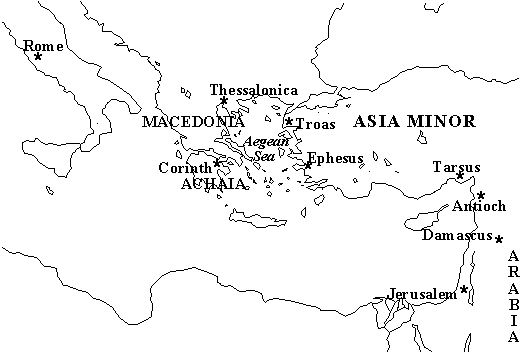
For geographical context, below is a link to a map that shows the location of Ephesus.
https://NETBible.org/media/images/constable/45Rom-1.jpg
Below is a link to another map that shows the location of Ephesus. This map also shows the other locations that compose the seven locations of the churches of Revelation. The seven churches of Revelation are located in grid coordinate B2. The key for this map is located in grid coordinates B3 and C3. A list of those seven churches, sorted in order of mention in Revelation 2–3, is located in grid coordinate D1.
https://Classic.NET.Bible.org/images/maps/nt2.jpg
If the above link is inaccessible, the below link can be tried instead.
https://NETBible.org/media/images/maps/nt2.jpg
Because it is useful to study verses that share the same context, below is content related to Ephesians 1.
Note: In notes for Ephesians 1, the Church Age is referenced. With regard to the Church Age, below is a synopsis of human history as categorized into time periods known as dispensations. In the below synopsis, there is the term hypostatic union [high-PUH-stat-ick YOON-yuhn]. This refers to the Lord Jesus Christ being 100% Deity and 100% humanity. The English word hypostatic is derived from the Koine [KOI-nay] Greek word ὑπόστασις [pronounced hoo-PAH-stah-sees and transliterated as hypostasis]. After the Lord Jesus Christ was judged for the sins of humanity, His body was in the grave for three days and three nights. He was then resurrected, and He was on the earth for forty days after He was resurrected. He then ascended to Heaven, and ten days after that, the Day of Pentecost [PEN-tih-kahst] occurred. The Day of Pentecost was the beginning of the Church Age. The word Pentecost is derived from the Koine Greek word πεντηκοστή [pronounced pen-tay-kah-STAY and transliterated as pentēkostē]. That word is derived from the Koine Greek word πεντήκοντα [pronounced pen-TAY-kahn-tah and transliterated as pentēkonta], which means “fifty.” Therefore, the word Pentecost is derived from the fact that that day occurred fifty days after the Lord was resurrected. In that regard, the Church Age began fifty days after the Lord was resurrected. The Church Age will end with the Rapture. The Rapture involves both deceased and living believers in the Lord Jesus Christ meeting the Lord in the clouds in the atmosphere of the earth, receiving glorified immortal resurrection bodies similar to the Lord Jesus Christʼs glorified resurrection body, and going to Heaven with those resurrection bodies. Before the Rapture occurs, deceased believers in the Lord Jesus Christ are in Heaven without glorified bodies. Absent from the Bible is anything specifically indicating the precise date and time when the Rapture will occur, although it is possible that the Rapture will occur during the time when the Feast of Trumpets / Yom Teruah [yahm tuh-ROO-uh or yohm tuh-ROO-uh] would occur—which is referenced as a single day in Leviticus 23:24–25 and Numbers 29:1–6 and which is what some people call Rosh Hashanah and which some people celebrate for two days—the next occurrence of which will possibly be during August, September, or October of 2027.
|
Dispensation |
Start |
Ending or Interruption |
|
|
|
|
|
Age of the Gentiles |
Adam |
The Age of the Gentiles ended with the Exodus of the Israelites from Egypt. |
|
|
|
|
|
Age of Israel |
Exodus |
The Age of Israel was interrupted on the Day of Pentecost. |
|
|
|
|
|
Age of the Hypostatic Union (part of the Age of Israel) |
First Advent of Christ |
The Age of the Hypostatic Union ended with the Ascension of Christ. |
|
|
|
|
|
Church Age |
Day of Pentecost |
The Church Age will end with the Rapture of the Church. |
|
|
|
|
|
Tribulation (Age of Israel resumed) |
Rapture |
The Tribulation will end with the Second Advent of Christ. |
|
|
|
|
|
Millennium |
Second Advent |
The 1,000-year Millennium will end with the Great White Throne Judgment of unbelievers. |
|
|
|
|
|
Eternal State |
Great White Throne Judgment |
The Eternal State will be never-ending. |
Regarding the word judgment, the proper way to spell that word is without an e between the dg and the m. In that regard, the e of the root word judge is dropped when the suffix ment is added to that root word. The formation of the word judgment is shown below.
judge −e +ment
= judg +ment
= judgment
Another way to categorize human history is by means of civilizations. Civilizations begin only with believers. Regarding the timing of civilizations and dispensations, the first civilization began with Adam and ended on the occasion of the Great Flood (also known as the Flood). That civilization is known as the antediluvian civilization and the predulivian civilization. In that regard, the prefixes ante and pre mean “before.” Also, there are various spellings of the adjectives that refer to the time before the Flood. Those spellings include antediluvian, ante-diluvian, prediluvian, and pre-diluvian.
After the Flood, there were only eight believers on the earth: Noah, his wife, their three sons, and their sonsʼ wives. With the removal of the unbelievers from the earth on the occasion of the Flood, a new civilization was started. That civilization is known as the postdiluvian civilization (also known as the postdiluvial civilization). Regarding the terminology, the prefix post means “after,” and the adjectives diluvian and diluvial mean “having to do with a flood.” Also, there are various spellings of the adjectives that refer to the time after the Flood. Those spellings include postdiluvian, post-diluvian, postdiluvial, and post-diluvial. The postdiluvian civilization will end on the occasion of the Second Advent of the Lord Jesus Christ. On the occasion of the Second Advent, the Lord will remove all unbelievers from the earth. Their removal will be by means of physical death just as the removal of all unbelievers was by means of physical death on the occasion of the Flood. This is called the Baptism of Fire, which is either a metaphorical description because fire can be used to represent judgment or a literal reference to the use of fire in the judgment of unbelievers on the occasion of the Second Advent. The Baptism of Fire is referenced in Matthew 3:11–12; Luke 3:15–17; and 2 Thessalonians 1:7–9.
Just as a new civilization started after the Flood, so also a new civilization will start after the Baptism of Fire. That civilization is called the Millennium. The Millennium is both a civilization and a dispensation. The Eternal State is also both a civilization and a dispensation.
Ephesians 1:1
Paul, an apostle of Christ Jesus through the will of God, to the saints / holy ones / set-apart ones who are also faithful in Christ Jesus / who are in Ephesus and faithful in Christ Jesus:
Note: All believers in the Lord Jesus Christ are saints. In other words, they are holy, which means that they are set apart. Believers in the Lord Jesus Christ have a relationship with the Trinity, while unbelievers lack a relationship with the Trinity. At the moment of salvation, a believer becomes a saint / holy one / set-apart one.
In the content of Ephesians 1:1 in some of the older manuscripts of The Epistle of Paul to the Ephesians, there is an absence of a reference to the location of the recipients of this epistle, while in some manuscripts of this epistle, the content of Ephesians 1:1 references the recipients being in Ephesus. In that regard, it is possible that this epistle was written to churches in multiple locations. Such an epistle can be referred to as a circular epistle.
In this verse is the Koine [KOI-nay] Greek word καὶ [pronounced KIGH and transliterated as kai]. That word is an inflected form of the root word καί [pronounced KIGH and transliterated as kai]. If the phrase translated as “in Ephesus” is absent from what Paul wrote, then kai can be translated as “also” in this verse. If the phrase translated as “in Ephesus” is in what Paul wrote, then kai can be translated as “and” in this verse. Regardless of whether what Paul wrote involved a reference to Ephesus in this verse, the word kai in this verse indicates that the phrase faithful in Christ Jesus refers to the believers who are referenced earlier in the verse.
Ephesians 1:2
Grace to you and peace from God our Father and the Lord Jesus Christ.
Ephesians 1:3
Blessed be the God and Father of our Lord Jesus Christ, Who has blessed us with every spiritual blessing in the heavenlies in Christ,
Note: The phrase God and Father refers to God the Father. In that regard, the phrase God and Father is a hendiadys [hen-DIGH-uh-diss], which is a figure of speech in which two words joined by the word and are used to express a single thought when one of those words could be used to describe the other word. Regarding the Koine [KOI-nay] Greek word translated as “heavenlies” in this verse, that Koine Greek word is an adjective that is used as a noun. That Koine Greek adjective is ἐπουρανίοις [pronounced ep-oo-rah-NEE-ois and transliterated as epouraniois]. That adjective is an inflected form of the root word ἐπουράνιος [pronounced ep-oo-RAH-nee-ahs and transliterated as epouranios]. In this verse, heavenlies refers the to the Third Heavens (also known as the Third Heaven or simply as Heaven), which is where the throne room of God the Father is located. The fact that the inflected form epouraniois is a plural form of epouranios is an indicator that the place where the throne room of God the Father is located is a location involving multiple places. Regarding the word heaven, below is a summary of the different usages for that word.
• The first heaven (also known as [aka] first heavens): the atmosphere of earth
• The second heaven (aka second heavens): outer space
• The Third Heaven (aka Third Heavens or simply as Heaven): the location of the throne room of God the Father
Ephesians 1:4
just as He chose/elected us in Him before the foundation of the world, that we would be holy / set apart and blameless/unblemished before Him, in benevolence/goodwill/love
Note: In this verse, the pronoun Him in the phrase in Him refers to the Lord Jesus Christ. The pronoun Him in the phrase before Him refers to God the Father. The phrase in benevolence/goodwill/love refers to what follows in verse 5.
God the Father chose/elected people who He knew would believe in the Lord Jesus Christ as the Savior. In that regard, God the Father knew in eternity past who would believe in the Lord Jesus Christ as the Savior. Because God the Father is omniscient [all-knowing], He knew in eternity past what decisions each human being would choose to make. Because God the Father is just, He permits each human being to make use of his or her volition [voh-LISH-uhn or vuh-LISH-uhn] (free will). Because God the Father knew ahead of time what decisions each human being would choose to make, God the Father foreknew what those decisions would be. With that knowledge about every humanʼs choices, God the Father decreed that those people would indeed make the choices that He knew that they would choose to make. His decree predestined those choices to indeed occur. No matter what Satan or any other angel or any human being or any other creature would try to do to prevent those choices from being made, God the Fatherʼs predestining of those choices ensures that those choices will indeed be made. In that way, God the Father ensures that each human is able to make choices from his or her volition (free will). In that regard, God the Father predestined that peopleʼs free-will decisions to become believers in the Lord Jesus Christ would indeed occur.
If God the Father were to make peopleʼs choices for them instead of permitting each person to make his or her own decisions from his or her volition (free will), then God the Father would be showing partiality toward certain people. Rather than being partial, God the Father is impartial. This matter of God the Fatherʼs impartiality is referenced in Romans 2:11. In that regard, below is content related to Romans 2:11.
Romans 2:11
Indeed, there is no partiality with God.
In Ephesians 1:4, the Koine Greek adjective that is translated as “holy” or “set apart” is ἁγίους [pronounced hah-GEE-oos and transliterated as hagious]. That adjective is an inflected form of the root word ἅγιος [pronounced HAH-gee-ahs and transliterated as hagios]. In Ephesians 1:4, the word hagios references the positional sanctification of believers in the Lord Jesus Christ.
The term positional sanctification refers to God the Holy Spirit baptizing every Church Age believer in the Lord Jesus Christ into Jesus Christ, which means placing that Church Age believer into union with the Person of Jesus Christ. In other words, God the Holy Spirit makes the believer associated with the Lord. God the Holy Spirit does the baptizing of a believer at the moment of salvation of that believer. This association with the Lord Jesus Christ is a guarantee of eternal security, which means that the salvation of a believer can never be lost. The term experiential sanctification refers to a believer in the Lord Jesus Christ being unselfish as frequently as possible. In order to be unselfish, a believer must obey the Word of God. In order to obey the Word of God, a believer must learn the Word of God while in fellowship with the Trinity and thereby filled with the power of God the Holy Spirit and then apply the Word of God while in fellowship with the Trinity and thereby filled with the power of God the Holy Spirit. In that regard, once a believer commits a sin after salvation, that believer is no longer filled with the power of God the Holy Spirit and is out of fellowship with the Trinity. After that believer has confessed/acknowledged to God the Father all of that believerʼs known unconfessed post-salvation sins, fellowship with the Trinity and the filling with the power of the Holy Spirit are restored. The procedure for confessing/acknowledging to God the Father all of oneʼs known unconfessed post-salvation sins is mentioned in 1 John 1:9: “If we confess our sins, He is faithful and just to forgive us our sins and to cleanse us from all unrighteousness.” Fellowship with God the Father and God the Son is mentioned in 1 John 1. Being out of fellowship with God the Holy Spirit is referenced in Ephesians 4:30. In that regard, when a believer sins, that believer grieves the Holy Spirit. Losing the filling of the power of God the Holy Spirit is referenced in 1 Thessalonians 5:19. In that regard, when a believer sins, the power of God the Holy Spirit is quenched in that believer. After a believer has confessed/acknowledged to God the Father all of that believerʼs known unconfessed post-salvation sins, that believer is then filled with the power of God the Holy Spirit again, in fellowship with the Trinity again, and ready to learn and obey the Word of God again. Learning and obeying the Word of God results in changing oneʼs thinking.
The Koine Greek adjective that is translated as “blameless” or “unblemished” in Ephesians 1:4 is ἀμώμους [pronounced ah-MOH-moos and transliterated as amōmous]. That adjective is an inflected form of the root word ἄμωμος [pronounced AH-moh-mahs and transliterated as amōmos]. In Ephesians 1:4, the word amōmos references the ultimate sanctification of believers in the Lord Jesus Christ.
The term ultimate sanctification refers to the receiving of a resurrection body. For Church Age believers in the Lord Jesus Christ, the receiving of a resurrection body will occur at the Rapture. From the Rapture onward, each Church Age believerʼs soul will be clothed (metaphorically speaking) with an immortal, sinless resurrection body. Each Church Age believerʼs soul will thereby be delivered from the old sin nature (OSN) that was in his or her mortal body. Every human except the Lord Jesus Christ has acquired an old sin nature, and each humanʼs old sin nature is in the body of that human. The old sin nature, which is referenced in Ephesians 4:22 with the term old man, can also be referred to as the sin nature. It is also referenced using the word flesh in Ephesians 2:3 and Galatians 5:16. The content of Romans 6:6 associates the sin nature with peopleʼs bodies, and the content of Romans 7:17–18 references the sin nature being in peopleʼs bodies. Adam and Ishshah [ish-SHAW] (the name of Eve before Adam renamed her Eve) were created without old sin natures, and they acquired old sin natures when they sinned. All other human beings have been conceived. Only the Lord Jesus Christ was conceived without an old sin nature. All the other humans that were conceived have been conceived with old sin natures. Likewise, all humans in the future will be conceived, and the conceiving of each of them will involve each of them receiving an old sin nature at the moment that each of them will be conceived.
The content of Ephesians 1:4 is repeated below for reference.
Ephesians 1:4
just as He chose/elected us in Him before the foundation of the world, that we would be holy / set apart and blameless/unblemished before Him, in benevolence/goodwill/love
Ephesians 1:5
having predestined us to adoption as sons through Jesus Christ to Himself, according to the good pleasure of His will,
Note: As mentioned in the notes for verse 4, God the Father knew in eternity past who would believe in the Lord Jesus Christ as the Savior, God the Father predestined that those peopleʼs free-will decisions to become believers in the Lord Jesus Christ would indeed occur, and neither Satan nor any other angel nor any human nor any other creature can prevent people from believing in the Lord Jesus Christ as the Savior. Regarding the word adoption in Ephesians 1:5, in the Roman Empire at the time that Paul wrote this epistle, adoption could involve adopting a person of any age into the family of the person doing the adopting. In the Church Age, when a person believes in the Lord Jesus Christ as the Savior, that person enters into a relationship with God the Father that can be described as adoption into the family of God the Father. A person who is adopted does no work in the adoption. In that regard, the phrase through Jesus Christ calls attention to the fact that the Lord Jesus Christ did the work. Believers simply receive the free gift of eternal life without working for it.
Ephesians 1:6
to the praise of the glory of His grace, which He freely bestowed on us in the Beloved,
Note: In Ephesians 1:6, the word Beloved refers to the Lord Jesus Christ.
Ephesians 1:7
in Whom we have redemption through His blood, the forgiveness of our trespasses, according to the riches of His grace
Note: In this verse, the pronoun Whom refers to the Lord Jesus Christ. Likewise, the pronoun His in the phrase His blood refers to the Lord Jesus Christ. The pronoun His in the phrase His grace refers to God the Father.
The blood of Christ is a metaphor that refers to the Lord Jesus Christʼs spiritual death on the cross. His spiritual death on the cross involved Him being judged for all of the sins of humanity. The reason that a metaphor involving blood is used to refer to the Lord Jesus Christ being judged on the cross is because of the sacrifice of certain types of animals before the Mosaic Law was given to the Israelites and also during the time period when the Israelites were under the Mosaic Law. The term Mosaic Law refers to the laws communicated by Moses to the ancient Israelites. Because Moses communicated those laws, they are known collectively as the Mosaic Law. The Lord Jesus Christ fulfilled the Mosaic Law by being judged on the cross for the sins of humanity. Now that the Lord Jesus Christ has fulfilled the Mosaic Law, people should refrain from sacrificing animals because such sacrifices have been invalidated by the Lord Jesus Christʼs fulfilling of the Mosaic Law when He received the judgment for the sins of humanity.
Also, the content of this verse indicates that the forgiveness of sins is a matter of the grace of God the Father rather than a matter of the works of the person being forgiven. Grace is unmerited favor. In that regard, this verse calls attention to the unmerited favor experienced by the person who is saved rather than calling attention to the person who is saved doing any works to merit that favor.
Ephesians 1:8
which He made abundant toward us, in all wisdom and insight
Note: God the Father has made His grace abundant toward believers in the Lord Jesus Christ. The phrase wisdom and insight is a hendiadys [hen-DIGH-uh-diss], which is a figure of speech in which two words joined by the word and are used to express a single thought when one of those words could be used to describe the other word. The usage of that phrase in this verse calls attention to the omniscience [ahm-NISH-uhns] [all-knowingness] of God the Father.
In this verse, the Koine Greek noun that is translated as “wisdom” is σοφίᾳ [pronounced sah-FEE-ah and transliterated as sophia]. That noun is an inflected form of the root word σοφία [pronounced sah-FEE-ah and transliterated as sophia]. The Koine Greek noun that is translated as “insight” in this verse is φρονήσει [pronounced frah-NAY-say and transliterated as phronēsei]. That noun is an inflected form of the root word φρόνησις [pronounced FRAH-nay-sees and transliterated as phronēsis].
Ephesians 1:9
making known to us the mystery of His will, according to His good pleasure which He purposed in Him
Note: Certain aspects of God the Fatherʼs plan, including Bible doctrines that are related to the Church Age, were a mystery to people who lived before the New Testament was available. Now that the New Testament is available, believers can know aspects of God the Fatherʼs plan that are revealed in the New Testament. God the Father made that information available in the New Testament because it is pleasing for God the Father to make that information available.
In this verse, the pronoun His and the pronoun He refer to God the Father. The pronoun Him in this verse refers to the Lord Jesus Christ. It is God the Fatherʼs purpose that His plans be carried out by the Lord Jesus Christ.
Ephesians 1:10
with a view to an administration/dispensation of the fullness of the times / completion of the times, the summing up of / gathering together under one Head all things in Christ, things in the heavens and things on the earth—in Him
Note: The content of this verse is such that it is logical to conclude that the dispensation referenced in this verse is the Millennium. In that regard, the Millennium is the last dispensation of the time periods before the Eternal State. As such, the Millennium can be referred to as the fullness of the times or as the completion of the times because the times will be full—in other words, completed—when the Millennium ends and the Eternal State begins.
During the Millennium, the Lord Jesus Christ will exercise authority over all of Creation. In that regard, all of Creation will collectively be under the authority of the Lord. Not only will all of Creation involving the earth be under the authority of the Lord, but also all of Creation in the heavens will be under the authority of the Lord. In that regard, the phrase all things in this verse indicates that, rather than merely a portion of Creation in the universe will be under the authority of the Lord, all of Creation in the entire universe will be under the authority of the Lord.
Ephesians 1:11
in Whom also we were allotted as an inheritance / a possession, having been predestined according to His purpose Who works all things after the counsel of His will,
Note: In this verse, the Koine Greek verb that is translated as “we were allotted as an inheritance / a possession” is ἐκληρώθημεν [pronounced eh-klay-ROH-thay-mehn and transliterated as eklērōthēmen]. That verb is an inflected form of the root word κληρόω [pronounced klay-RAH-oh and transliterated as klēroō]. The verb κληρόω has the connotation of allotting a portion of land as an inheritance that becomes the inheritorʼs possession. Regarding the foregoing, Paul, by means of an analogy involving the human activity of allotting a portion of land, calls attention to the fact that believers belong to God the Father.
The phrase in Whom in this verse refers to the Lord Jesus Christ. It is by means of the Lord Jesus Christ that believers become allotted as an inheritance / a possession belonging to God the Father. In that regard, believers receive the action of being allotted to God the Father rather than believers allotting themselves to God the Father.
In this verse, both instances of the pronoun His and the instance of the pronoun Who refer to God the Father. In that regard, Paulʼs usage of the phrase according to His purpose Who works all things after the counsel of His will calls attention to the sovereignty [supreme authority] of God the Father. Regarding God the Father being sovereign, the reference to believers being allotted to God the Father is an analogy rather than a literal reference because there is no one who has authority over God the Father and there is therefore no one who allots believers to God the Father.
Ephesians 1:12
for our being to the praise of His glory, those who have previously trusted in the Christ,
Note: God the Father wants believers to bring glory to Him. When a believer obeys the Word of God, that brings glory to God the Father.
Ephesians 1:13
in Whom, you also, after listening to the message of truth, the gospel of your salvation—in Whom also having believed, you were sealed with the Holy Spirit of promise,
Note: The phrase you were sealed with the Holy Spirit of promise is a reference to the eternal security of all believers in the Lord Jesus Christ. Believers can never lose their eternal life.
Ephesians 1:14
Who is Pledge / Down Payment / Earnest of our inheritance, with regard to the redemption of the possession / purchased property, to the praise of His glory.
Note: God the Holy Spirit is the Person to Whom the pronoun Who in this verse refers. God the Father is the Person to Whom the pronoun His refers in this verse. The Koine Greek noun that is translated as “Pledge,” “Down Payment,” of “Earnest” in this verse is Ἀρραβὼν [pronounced ahr-rah-BOHN and transliterated as Arrabōn]. That noun is an inflected form of the root word ἀρραβών [pronounced ahr-rah-BOHN and transliterated as arrabōn]. The English noun pledge can be used to refer to something that is given to guarantee payment of a debt or fulfillment of an obligation. The English term down payment refers to an initial payment that is a partial payment, with the remainder of the payment to be paid later. The English noun earnest can be used to refer to something that is a promise or assurance of what is to come. In that regard, the noun earnest can be used to refer to earnest money, which is money paid as partial payment in order to establish a binding contract. Regarding the foregoing, the fact that each believer is sealed with the Holy Spirit guarantees that each believer receives the inheritance of redemption, which, in the context of this verse, refers to the receiving of a resurrection body. As mentioned in the notes for verse 4, the receiving of a resurrection body can be referred to as ultimate sanctification.
In referencing each believer receiving inheritance in the form of a resurrection body, Paul uses a play on words. That wordplay involves the content of verse 11 and the content of verse 14. In that regard, the content of verse 11 involves Paul referring to believers as an inheritance / a possession allotted to God the Father, and the content of verse 14 involves Paul referring to a believerʼs resurrection body being an inheritance of that believer. The Koine Greek noun that is translated as “inheritance” in verse 14 is κληρονομίας [pronounced klay-rah-nah-MEE-ahs and transliterated as klēronomias]. That noun is an inflected form of the root word κληρονομία [pronounced klay-rah-nah-MEE-ah and transliterated as klēronomia].
In verse 14, there is an absence of a definite article in front of the noun Arrabōn. The absence of a definite article in front of a noun is known as an anarthrous construction [an-AR-thruhs kuhn-STRUHK-shuhn]. When there is an anarthrous construction, the quality of the noun is what is being emphasized in the grammar of the Koine Greek. In that regard, the quality of God the Holy Spirit functioning as the Pledge / Down Payment / Earnest is being emphasized in this verse.
The Koine Greek noun that is translated as “redemption” in this verse is ἀπολύτρωσιν [pronounced ah-pah-LOO-troh-seen and transliterated as apolytrōsin]. That noun is an inflected form of the root word ἀπολύτρωσις [pronounced ah-pah-LOO-troh-seess and transliterated as apolytrōsis]. The noun apolytrōsis is derived from the Koine Greek preposition ἀπό [pronounced ah-PAH and transliterated as apo] and the Koine Greek noun λύτρον [pronounced LOO-trahn and transliterated as lytron]. The preposition apo can be translated a variety of ways. Regarding the noun apolytrōsis being derived from the preposition apo, that derivation involves the preposition from in the sense of away from. The noun lytron can be translated as “price for redeeming” or as “ransom.” In that regard, the noun lytron can be used to refer to the price paid to free a slave or a captive.
The Koine Greek noun that is translated as “possession,” or “purchased property” in this verse is περιποιήσεως [pronounced peh-ree-poi-AY-seh-ohss and transliterated as peripoiēseōs]. That noun is an inflected form of the root word περιποίησις [pronounced peh-ree-POI-ay-seess and transliterated as peripoiēsis]. In this verse, peripoiēseōs is used to refer to the possession / purchased property that belongs to God the Father. In that regard, as with Paulʼs usage of an analogy in verse 11, Paul uses another analogy in verse 14. In verse 11, Paul uses an analogy involving inheritance in order to call attention to the fact that each believer in the Lord Jesus Christ belongs to God the Father. In verse 14, Paul uses an analogy involving purchased property in order to call attention to the fact that each believer in the Lord Jesus Christ belongs to God the Father. Also, in verse 12, Paul indicates that each believer in the Lord Jesus Christ belongs to God the Father for the purpose of glorifying God the Father. Paul reiterates that fact in verse 14 by again indicating that each believer in the Lord Jesus Christ belongs to God the Father for the purpose of glorifying God the Father.
Ephesians 1:15
For this reason, I, too, having heard of the faith in the Lord Jesus which exists among you and your benevolence/goodwill [three early manuscripts do not contain your benevolence/goodwill] for all the saints / holy ones / set-apart ones,
Note: As mentioned in the notes for verse 1, all believers in the Lord Jesus Christ are saints. In other words, they are holy, which means that they are set apart. Believers in the Lord Jesus Christ have a relationship with the Trinity, while unbelievers lack a relationship with the Trinity. At the moment of salvation, a believer becomes a saint / holy one / set-apart one.
Ephesians 1:16
do not cease giving thanks for you while making mention in my prayers,
Ephesians 1:17
that the God of our Lord Jesus Christ, the Father of glory, may give to you a spirit of wisdom and of revelation in the epignōsis knowledge of Him—
Note: All prayer must be addressed to God the Father. In that regard, the Lord Jesus Christ Himself indicated that all prayer must be addressed to God the Father. The content of Matthew 6:1–13 covers the Lord giving an example about how to pray. In that regard, the content of Matthew 6:9 covers the Lord commanding that prayers be addressed to God the Father. The content of Luke 11:1–4 also covers the Lord giving an example about how to pray. In that regard, the content of Luke 11:2 covers the Lord commanding that prayers be addressed to God the Father.
At the moment of salvation, each believer in the Lord Jesus Christ receives a human spirit, which is a believerʼs essence that involves thinking of Bible doctrine—in other words, thinking that involves the Word of God. An unbeliever lacks a human spirit. In contrast with a human spirit, a soul is a personʼs essence that involves thinking in general. Each unbeliever has a body and soul; therefore, unbelievers are dichotomous [digh-KAHT-uh-muhs]. Each believer has a body, soul, and human spirit; therefore, believers are trichotomous [trigh-KAHT-uh-muhs].
The phrase epignōsis knowledge found in the above translation and the phrase true knowledge found in the footnotes of the New American Standard Bible 1995 translation of Ephesians 1:17 are translations of the Koine [KOI-nay] Greek noun ἐπίγνωσιν [pronounced eh-PEE-know-seen and transliterated into English as epignōsin]. That noun is an inflected form of the root word ἐπίγνωσις [pronounced eh-PEE-know-sees and transliterated as epignōsis (some people leave the macron off the o and transliterate the word as epignosis)]. In the New American Standard Bible 1995 (NASB 1995) translation of various verses, the word epignōsis is translated as “knowledge,” “real knowledge,” and “true knowledge.” Sometimes, the NASB 1995 translation also has a footnote indicating that epignōsis can be translated as “recognition.” When precisely translated, rather than simply referring to knowledge, the word epignōsis refers to that which is above or beyond ordinary knowledge. The Koine Greek word for ordinary knowledge is γνῶσις [pronounced KNOW-sees and transliterated as gnōsis or gnosis]. In the Bible, epignōsis is used to refer to knowledge of the Word of God.
Ephesians 1:18
the eyes of your heart being enlightened, so that you will know what is the hope / absolute confidence of His calling, what are the riches of the glory of His inheritance / possession in the saints / holy ones / set-apart ones
Note: The heart refers to the mind. In that regard, the phrase the eyes of your heart being enlightened is a metaphorical reference to understanding the Word of God. Regarding the verb are being italicized in the above translation, Paul wrote part of this verse elliptically, omitting a verb.
As with the content of verse 11, the content of verse 18 involves Paul referring to believers as an inheritance / a possession allotted to God the Father. Also, the analogy used by Paul in verse 18 involves a reference to believers being a possession consisting of riches that result in God the Father being glorified. In verse 18, the Koine Greek noun that is translated as “inheritance / possession” is κληρονομίας [pronounced klay-rah-nah-MEE-ahs and transliterated as klēronomias]. That noun is an inflected form of the root word κληρονομία [pronounced klay-rah-nah-MEE-ah and transliterated as klēronomia]. The inflected form klēronomias is also used in verse 14, where it is translated as “inheritance.” In that regard, in the content of verse 18, Paul continues the wordplay that he used in the content of verse 11 and the content of verse 14.
The Koine Greek noun that is translated as “riches” in verse 18 is πλοῦτος [pronounced PLOO-tahs and transliterated as ploutos]. That noun is an inflected form of the root word πλοῦτος [pronounced PLOO-tahs and transliterated as ploutos]. Regarding Paulʼs usage of ploutos in verse 18, Paul indicates that believers are valuable to God the Father. Believers being valuable to God the Father results in God the Father being glorified.
Ephesians 1:19
and what is the surpassing greatness of His power toward us who believe, according to the working of the strength of His might
Ephesians 1:20
which He brought about in Christ, when He raised Him from the dead and seated Him at His right hand in the heavenlies,
Note: The right-hand side of a ruler is a place of honor.
Ephesians 1:21
far above all rule and authority and power and dominion and every name that is named, not only in this age but also in the one to come.
Note: In this verse, the phrase this age refers to the Church Age, and the phrase the one to come refers to the Millennium.
Ephesians 1:22
Also, He put all things in subjection under His feet and gave Him as Head over all things to the Church,
Note: In this verse, the pronoun He refers to God the Father, and the pronouns His and Him refer to the Lord Jesus Christ. Also, what the content of this verse describes can be referred to as Operation Footstool. In that regard, this verse indicates that the Lord Jesus Christ has authority over all of Creation, including Satan and the other fallen angels. While God the Father has already given authority over all of Creation to the Lord Jesus Christ, the Lordʼs claiming of the part of Creation that is planet earth and all that is on it and in it will occur on the occasion of the Second Advent. In the meantime, God the Father permits Satan to function as the illegitimate ruler of the world until the Second Advent.
The term church as used in the Bible refers to a collection of believers in the Lord Jesus Christ rather than referring to a building. The Koine Greek word translated as “Church” with a capital C in this verse is Ἐκκλησίας [pronounced ek-klay-SEE-ahs and transliterated as Ekklēsias]. That noun is an inflected form of the root word ἐκκλησία [pronounced ek-klay-SEE-ah and transliterated as ekklēsia]. In addition to being used to refer to a collection of believers in the Lord Jesus Christ, the word ekklēsia can be used to refer to an assembly of people. For the sake of clarity when referring to Church Age believers in the Lord Jesus Christ, the word church with a lowercase c can be used to refer to a specific collection of Church Age believers rather than to all Church Age believers collectively, and the word Church with a capital C can be used to refer to all Church Age believers collectively. In that regard, the usage of the word Church in this verse refers to all Church Age believers collectively.
Also, the content of this verse indicates that God the Father gave the Lord Jesus Christ to Church Age believers. In that regard, the Lord is Head of the Church. The fact that He is Head of the Church is revealed by content in verse 23.
Ephesians 1:23
which is His body, the fullness of Him Who fills the all in all.
Note: The content of verses 22 and 23 indicates that Church Age believers are the metaphorical body of the Lord Jesus Christ and that the Lord Jesus Christ is the metaphorical Head of that metaphorical body. The term body has a connotation involving various believers in the Lord Jesus Christ getting along with each other harmoniously so that the various believers can effectively serve God the Father. That connotation of the metaphorical body of Christ is covered in chapters of The Epistle of Paul to the Ephesians that follow the first chapter.
Regarding the phrase the fullness of Him in the above translation of Ephesians 1:23, the Koine Greek noun that is translated as “fullness” in this verse is πλήρωμα [pronounced PLAY-roh-mah and transliterated as plērōma]. That noun is an inflected form of the root word πλήρωμα [pronounced PLAY-roh-mah and transliterated as plērōma]. The noun plērōma can be used to refer to fullness in the sense of that which is filled. That noun can also be used to refer to that which fills. Absent from this verse and verse 22—which is part of the same sentence—is anything indicating that the body—in other words, the Church—does the action of filling. Therefore, it is logical to conclude that the content of verse 23 indicates that the Church is what is filled. In that regard, it is possible that the content of this verse refers to the body of the Church being filled up and that the filling up of the body of the Church involves either the number of Church Age believers increasing to a certain amount that can be referred to as full or the total amount of obeying of the Word of God done by Church Age believers increasing to a certain amount that can be referred to as full.
Regarding the phrase the all in all in the above translation of Ephesians 1:23, the Koine Greek word translated as “the” in that phrase is the Koine Greek definite article τὰ [pronounced TAH and transliterated as ta]. That definite article is an inflected form of the root word ὁ [pronounced HAH and transliterated as ho]. The first instance of a Koine Greek word that is translated as “all” in that phrase is the Koine Greek adjective πάντα [pronounced PAHN-tah and transliterated as panta]. That adjective is an inflected form of the root word πᾶς [pronounced PAHS and transliterated as pas]. The Koine Greek word that is translated as “in” in that phrase is the Koine Greek preposition ἐν [pronounced EN and transliterated as en]. The second instance of a Koine Greek word that is translated as “all” in that phrase is the Koine Greek adjective πᾶσιν [pronounced PAH-seen and transliterated as pasin]. That adjective is an inflected form of the root word πᾶς [pronounced PAHS and transliterated as pas].
Regarding the two instances of inflected forms of πᾶς in this verse, some English translations of this verse contain the phrase every way as the translation of the second instance of an inflected form of πᾶς. Such a translation is unreflective of the wording that Paul uses to express the thought that is communicated by means of the expression every way elsewhere in the Bible. In that regard, in Romans 3:2, Paul uses the Koine Greek phrase πάντα τρόπον [pronounced PAHN-tah TRAH-pahn and transliterated as panta tropon] to express the thought that is communicated by means of the expression every way. The adjective panta is an inflected form of the root word πᾶς [pronounced PAHS and transliterated as pas]. In that regard, rather than Paul using the adjective pas by itself to express the thought that is communicated by means of the expression every way, Paul expresses that thought by means of a combination of pas and an inflected form of another word. That other word is the noun τρόπος [pronounced TRAH-pahs and transliterated as tropos]. The inflected form of tropos in Romans 3:2 is tropon. Similarly, in Philippians 1:18, Paul uses an inflected form of the adjective pas in combination with an inflected form of the noun τρόπος to express the thought that is communicated by means of the expression every way. Likewise, in 2 Thessalonians 3:16, Paul uses an inflected form of the adjective pas in combination with an inflected form of the noun τρόπος to express the thought that is communicated by means of the expression every way. In contrast, absent from the content of Ephesians 1:23 is an inflected form of the noun τρόπος. Instead, both instances of inflected forms of the adjective pas in Ephesians 1:23 are present without being used in combination with a noun.
Regarding to what Paul refers with the two instances of the adjective pas in Ephesians 1:23, while it might seem that Paul is referring to Church Age believers, there are no words indicating that either instance of an inflected form of the adjective pas in this verse refers to Church Age believers. In that regard, two instances of inflected forms of the adjective pas are in verse 22. Both of those instances of inflected forms of the adjective pas are translated as “all things.” Both of those instances of inflected forms of the adjective pas in verse 22 could be translated as “all”; however, translating them simply as “all” instead of “all things” could lead to confusion with regard to all of what is being referenced. Therefore, the word things is used in the phrase all things in verse 22 for the sake of clarity. Also, the word everything could be used to translate both instances of the adjective pas in verse 22.
Regarding both instances of the adjective pas in verse 23 being translated as “all” instead of as “all things” or “everything,” verse 23 contains an inflected form of the definite article ho [HAH] in front of the first instance of the adjective pas. In that regard, the phrase all things is used in English without a definite article. Likewise, the word everything is used in English without a definite article. In contrast, the word all can be used in English with a definite article. Regarding the word all being used in English with a definite article, while the word all can be used in English without a definite article, using it with a definite article can provide emphasis.
Because nothing is specified regarding what is the all that the Lord Jesus Christ fills in all and because nothing is specified regarding what is the all in which the Lord Jesus Christ fills all, it is possible that both instances of the word all in this verse refer to all of Creation. The Lord Jesus Christ is the Creator and Sustainer of all of Creation. In that regard, He created and sustains everything that is in everything. Because the Lord Jesus Christ is the Creator and Sustainer of all of Creation, He can take care of all of the members of His body—in other words, all Church Age believers. Regarding the foregoing, it is possible that the content of this verse refers to the Lord Jesus Christ controlling circumstances such that there are opportunities for the amount of Church Age believers to increase or for Church Age believers to obey the Word of God or for both the amount of Church Age believers to increase and for Church Age believers to obey the Word of God.
Worth noting is that the Lord Jesus Christ is the Person Who is the Head of the Church—in other words, of all Church Age believers collectively. There is no other person who is the head of all Church Age believers collectively. In that regard, while a man who is the pastor of a local congregation has authority within the limited scope of ensuring that potential disruptions of the teaching to that congregation are prevented from occurring and that any disruptions that do occur are discontinued, absent from the Bible is anything indicating that since the time of the completion of the Canon of Scripture there is to be anyone with authority above the level of pastor-teacher. Therefore, any church that has a system of authority with a hierarchy is a church that is functioning in a manner that is in conflict with the content of the Word of God. In that regard, the Word of God calls for a decentralized church structure rather than a centralized one.
Sincerely,
John